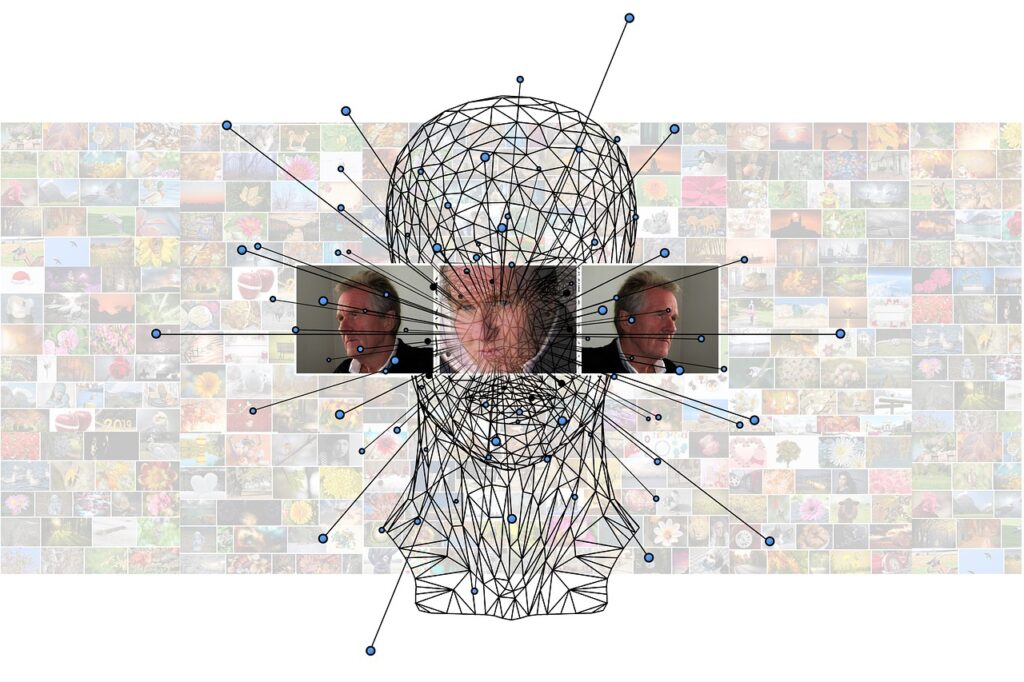

Introduction to Deep Learning
For beginners who have just discovered deep learning, it can be both exciting and intimidating. Deep learning is a subset of machine learning that involves the use of artificial neural networks to analyze various factors with a high level of accuracy. The field solves a specific real-world problem – the need for more accurate and efficient data analysis. As the amount of data being generated continues to grow, the need for better analysis tools also increases. Deep learning provides a solution by enabling computers to learn from data and make predictions or decisions without being explicitly programmed. Here’s the key thing to understand: deep learning models can be applied to a wide range of tasks, including image recognition, speech recognition, and natural language processing.
📝 Table of Contents
Defining Deep Learning
Deep learning refers to a type of machine learning that uses neural networks with multiple layers to learn complex patterns in data. These layers allow the model to automatically and adaptively learn relevant features from the input data, making it particularly useful for tasks like image and speech recognition.
| Term | Plain-English Meaning |
|---|---|
| Neural Network | A computer system modeled on the human brain, used for tasks like image recognition. |
| Backpropagation | A method used to train neural networks by minimizing the error between predicted and actual outputs. |
| Convolutional Neural Network (CNN) | A type of neural network designed to process data with grid-like topology, such as images. |
| Recurrent Neural Network (RNN) | A type of neural network designed to handle sequential data, such as speech or text. |
| Overfitting | When a model is too complex and performs well on training data but poorly on new data. |
| Underfitting | When a model is too simple and fails to capture the underlying patterns in the training data. |
Why Deep Learning Matters
Deep learning matters because it has the potential to revolutionize numerous industries and aspects of our lives. For instance, it can be used in healthcare to analyze medical images, such as X-rays and MRIs, to help doctors diagnose diseases more accurately and earlier. According to a study, deep learning models can detect breast cancer from mammography images with a high degree of accuracy, outperforming human radiologists in some cases. Most people miss this: deep learning is not just about image recognition; it can also be applied to natural language processing tasks, such as language translation and text summarization.
Deep learning benefits various groups, including businesses, researchers, and individuals. For businesses, deep learning can help improve customer service by enabling chatbots to understand and respond to customer inquiries more effectively. For researchers, deep learning provides a powerful tool for analyzing large datasets and discovering new patterns and insights. For individuals, deep learning can enhance their daily lives by powering personal assistants, such as Siri and Alexa, and improving the accuracy of speech recognition systems.
The real-world impact of deep learning is significant, with applications in areas like self-driving cars, facial recognition, and sentiment analysis. For example, self-driving cars use deep learning models to detect and respond to objects on the road, such as pedestrians, cars, and traffic lights. Facial recognition technology, powered by deep learning, can be used for security purposes, such as identifying individuals in a crowd. Sentiment analysis, another application of deep learning, can help businesses understand customer opinions and sentiments about their products or services. areas like selfdriving
Core Deep Learning Approaches
1. Data Preprocessing
Data preprocessing is a critical step in deep learning, involving the cleaning, transformation, and preparation of data for use in a model. This step is essential because deep learning models can only learn from high-quality data. To preprocess data, one can use techniques such as normalization, feature scaling, and handling missing values. A common beginner mistake is not exploring the data thoroughly before feeding it into a model.
- Strengths: Improves model performance, reduces risk of overfitting, enhances interpretability of results.
- Allows for the identification and handling of outliers and anomalies in the data.
2. Model Selection
Model selection involves choosing the most appropriate deep learning architecture for a given task. This step requires careful consideration of factors such as the type of data, the complexity of the task, and the available computational resources. To select a model, one can use techniques such as cross-validation and grid search. A common mistake is choosing a model that is too complex for the available data.
- Strengths: Enables the selection of the most suitable model for the task at hand, improves model performance, reduces training time.
- Allows for the comparison of different models and the identification of the best-performing one.
3. Hyperparameter Tuning
Hyperparameter tuning involves adjusting the hyperparameters of a deep learning model to optimize its performance. Hyperparameters are parameters that are set before training a model, such as the learning rate, batch size, and number of epochs. To tune hyperparameters, one can use techniques such as random search and Bayesian optimization. A common beginner mistake is not tuning hyperparameters systematically.
- Strengths: Improves model performance, reduces risk of overfitting, enhances robustness of the model.
- Allows for the identification of the most critical hyperparameters and their optimal values.
4. Model Training
Model training involves feeding the preprocessed data into the selected model and adjusting the model’s parameters to minimize the loss function. This step requires careful monitoring of the model’s performance on the training and validation sets. To train a model, one can use techniques such as stochastic gradient descent and Adam optimization. A common mistake is not monitoring the model’s performance on the validation set. Model training involves
- Strengths: Enables the model to learn from the data, improves model performance, reduces risk of underfitting.
- Allows for the adjustment of the model’s parameters to fit the data.
5. Model Evaluation
Model evaluation involves assessing the performance of a trained model on a test set. This step is essential because it provides an unbiased estimate of the model’s performance on unseen data. To evaluate a model, one can use metrics such as accuracy, precision, and recall. A common beginner mistake is not using a separate test set for evaluation.
- Strengths: Provides an unbiased estimate of the model’s performance, enables the comparison of different models, improves model selection.
- Allows for the identification of the model’s strengths and weaknesses.
6. Model Deployment
Model deployment involves integrating the trained model into a larger system or application. This step requires careful consideration of factors such as scalability, reliability, and interpretability. To deploy a model, one can use techniques such as model serving and containerization. A common mistake is not considering the model’s deployment requirements during training.
- Strengths: Enables the model to be used in real-world applications, improves model accessibility, enhances user experience.
- Allows for the integration of the model with other components and systems.
7. Model Maintenance
Model maintenance involves updating and refining a deployed model over time. This step is essential because it ensures the model remains accurate and effective in the face of changing data distributions and user needs. To maintain a model, one can use techniques such as online learning and transfer learning. A common beginner mistake is not continuously monitoring the model’s performance.
- Strengths: Ensures the model remains accurate and effective, improves model robustness, enhances user trust.
- Allows for the adaptation of the model to changing data distributions and user needs.
| Step | What You Do | Expected Result |
|---|---|---|
| 1. Data Preprocessing | Clean, transform, and prepare data for use in a model. | High-quality data ready for modeling. |
| 2. Model Selection | Choose the most appropriate deep learning architecture for the task. | Best-performing model for the task at hand. |
| 3. Hyperparameter Tuning | Adjust hyperparameters to optimize model performance. | Optimal hyperparameters for the model. |
| 4. Model Training | Feed preprocessed data into the selected model and adjust parameters. | Trained model with optimized parameters. |
| 5. Model Evaluation | Assess the performance of the trained model on a test set. | Unbiased estimate of the model’s performance. |
| 6. Model Deployment | Integrate the trained model into a larger system or application. | Deployed model accessible to users. |
| 7. Model Maintenance | Update and refine the deployed model over time. | Model remains accurate and effective over time. |
Frequently Asked Questions
What is the difference between deep learning and machine learning?
Deep learning is a subset of machine learning that involves the use of artificial neural networks to analyze data. Machine learning, on the other hand, is a broader field that encompasses a range of techniques for training models on data. While all deep learning is machine learning, not all machine learning is deep learning.
How do I choose the right deep learning framework for my project?
Choosing the right deep learning framework depends on factors such as the type of project, the size of the dataset, and the available computational resources. Popular deep learning frameworks include TensorFlow, PyTorch, and Keras. When selecting a framework, consider the level of support, the ease of use, and the performance.
What is the role of backpropagation in deep learning?
Backpropagation is a method used to train neural networks by minimizing the error between predicted and actual outputs. It involves propagating the error backwards through the network, adjusting the weights and biases of the neurons to minimize the loss function. Backpropagation is a critical component of deep learning, enabling the training of complex neural networks.
How do I avoid overfitting in deep learning models?
Overfitting occurs when a model is too complex and performs well on the training data but poorly on new data. To avoid overfitting, use techniques such as regularization, dropout, and early stopping. Regularization involves adding a penalty term to the loss function to discourage large weights, while dropout involves randomly dropping out neurons during training to prevent over-reliance on any single neuron. Early stopping involves stopping the training process when the model’s performance on the validation set starts to degrade.
What are some common applications of deep learning?
Deep learning has a wide range of applications, including image recognition, speech recognition, natural language processing, and recommender systems. It can be used in areas such as healthcare, finance, and transportation, enabling tasks such as disease diagnosis, fraud detection, and self-driving cars.
What It All Means
Mastering deep learning requires a thorough understanding of the concepts, techniques, and best practices involved. By avoiding common mistakes and following the core approaches outlined in this guide, individuals can develop effective deep learning models that drive real-world impact. With deep learning, the possibilities are endless, and the potential for innovation and discovery is vast.