
The drone industry in 2026 is being sold as a universal solution, but most hype is a smokescreen. Beginners who just heard about autonomous aerial platforms often think they can instantly solve logistics, surveillance, or farming problems with a single purchase. The reality is far more nuanced: regulations, data security, and integration hurdles still dominate. This guide tears down the myths, explains the concrete value, and equips newcomers with a step‑by‑step roadmap.
📝 Quick Navigation
Breaking Down Drones
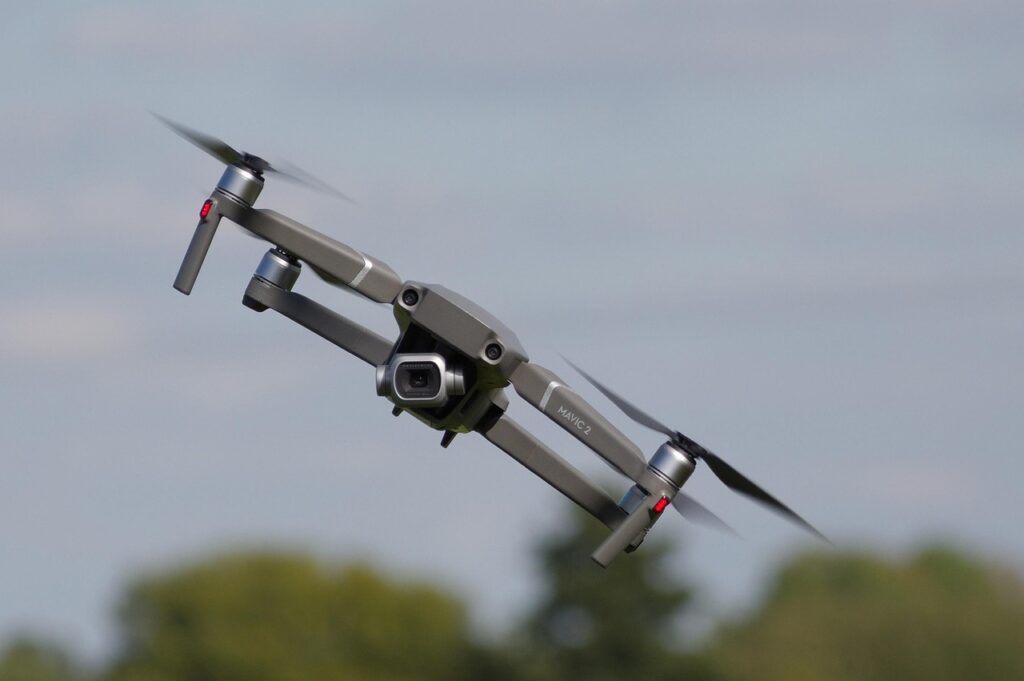
Drones are unmanned aerial vehicles (UAVs) equipped with sensors, communication modules, and autonomous flight software. In 2026 they range from sub‑10‑gram hobby quadcopters to 200‑kilogram cargo carriers with AI‑driven obstacle avoidance. The term covers everything from fixed‑wing surveillance platforms to hybrid VTOL (vertical take‑off and landing) machines that can hover like a helicopter and then cruise like an airplane.
| Term | Plain-English Meaning |
|---|---|
| VTOL | A drone that can take off and land vertically without a runway. |
| LiDAR | Laser scanning tech that creates precise 3‑D maps of terrain. |
| BVLOS | Beyond Visual Line‑Of‑Sight – flying a drone beyond the pilot’s direct sight, requiring special clearance. |
| Swarm | Multiple drones coordinated by AI to act as a single system. |
| Edge Computing | Processing data on the drone itself instead of sending it to a distant server. |
| UAS | Unmanned Aircraft System – the whole ecosystem of drone, controller, and support software. |
Why Drones (2026 update) Matters
The assumption that drones are a niche hobby is dead. In 2026, global commercial drone spend topped $30 billion, up 22 % from the previous year. That money is flowing into sectors that actually need aerial data: agriculture, construction, emergency response, and logistics. For example, a single autonomous delivery drone can move 5 kg of medication across a rural region in 30 minutes, cutting average delivery time from 6 hours to under an hour and saving an estimated 12 tons of CO₂ annually. global commercial drone
Farmers are the biggest beneficiaries of precision‑agri drones. A mid‑size farm using multispectral imaging reduced pesticide use by 27 % and increased yield by 15 % in a single season. The data‑driven insight comes from on‑board sensors that detect stress at a leaf‑level, allowing targeted treatment. The economic impact is measurable: the average U.S. corn farmer now earns $0.45 more per bushel thanks to drone‑enabled variable rate applications.
Emergency services have also seen a paradigm shift. During the 2025 wildfires in California, a swarm of 12 BVLOS drones mapped fire fronts in real time, delivering 3‑D thermal models to incident commanders every 10 seconds. This reduced evacuation planning time by 40 % and helped contain the blaze 18 % faster than traditional aircraft surveillance. The numbers prove drones aren’t a gimmick; they are a critical tool for saving lives and resources.
Major Drone Developments
1. Regulatory Evolution
The world finally moved beyond the “pilot‑only” model. Most major economies now allow BVLOS operations under a risk‑based framework, provided operators submit a safety case and employ real‑time telemetry.
Getting compliance right means registering the UAV, installing a Remote ID broadcast, and integrating with national airspace management platforms. Beginners often skip the safety case, assuming a simple waiver will suffice—this leads to costly delays. Getting compliance right
- Plus Points:
- Expanded operational envelope for commercial missions.
- Legal certainty reduces insurance premiums.
2. AI‑Driven Autonomy
Modern drones embed neural networks that process sensor data on‑board, enabling true autonomy: obstacle avoidance, dynamic rerouting, and mission adaptation without ground control.
Implementing AI autonomy requires training data specific to the operating environment and calibrating the edge processor. New users often rely on factory defaults, which work in open fields but fail in dense urban canyons.
- Plus Points:
- Reduced need for constant human oversight.
- Higher mission success rates under variable conditions.
3. Hybrid Power Systems
Battery‑only drones hit a hard ceiling at 45 minutes flight time. Hybrid systems combine lithium‑polymer cells with small‑scale fuel cells, pushing endurance to 3 hours for medium‑size platforms.
Integrating a hybrid system means balancing weight, fuel logistics, and thermal management. Beginners often overlook the extra pre‑flight checklist for fuel level, leading to unexpected aborts. hybrid system means
- Plus Points:
- Extended range opens new logistics corridors.
- Lower total cost of ownership compared to multiple battery swaps.
4. Swarm Coordination Protocols
Swarm tech lets dozens of drones act as a single sensor array, sharing data via mesh networks. This is critical for large‑area mapping, search‑and‑rescue, and agricultural scouting.
Deploying a swarm requires a ground station capable of handling concurrent telemetry streams and a robust fail‑safe algorithm. Novices often launch multiple drones without a central controller, causing radio collisions.
- Plus Points:
- Exponential increase in coverage speed.
- Redundancy—loss of one unit doesn’t cripple the mission.
5. Edge Computing Modules
Processing data on the drone eliminates latency and bandwidth costs. Edge modules now support TensorFlow Lite, enabling on‑board object detection for wildlife monitoring.
To use edge computing effectively, developers must containerize their AI models and test them on the exact hardware. A common mistake is deploying a desktop‑trained model that exceeds the drone’s compute budget, causing crashes. edge computing effectively
- Plus Points:
- Real‑time insights enable immediate action.
- Reduced reliance on cellular or satellite links.
6. Secure Communication Stacks
With data becoming a premium asset, encryption and authentication are now mandatory for commercial flights. AES‑256 encrypted links and blockchain‑based flight logs protect against tampering.
Operators often forget to update firmware, leaving default keys in place. This oversight opens the door to hijacking or data theft.
- Plus Points:
- Compliance with GDPR, CCPA, and industry‑specific regulations.
- Enhanced trust with clients and partners.
7. Integrated Data Platforms
Raw drone footage is worthless without a system to store, analyze, and visualize it. Cloud‑native platforms now offer automated stitching, orthomosaic generation, and GIS integration.
Beginners tend to download raw video files to local drives, missing out on automated analytics pipelines that turn pixels into actionable metrics. local drives missing
- Plus Points:
- Scalable storage and processing for large datasets.
- Turnkey dashboards accelerate decision‑making.
| Step | What You Do | Expected Result |
|---|---|---|
| 1. Regulatory Evolution | Register, obtain BVLOS clearance, install Remote ID. | Legal flight operations across wider airspace. |
| 2. AI‑Driven Autonomy | Train and upload environment‑specific models. | Reduced human intervention, higher success rates. |
| 3. Hybrid Power Systems | Install fuel‑cell module, manage fuel checklist. | Extended flight endurance up to 3 hours. |
| 4. Swarm Coordination Protocols | Deploy mesh‑enabled ground station, configure fail‑safe. | Massive area coverage with redundancy. |
| 5. Edge Computing Modules | Containerize AI models, test on‑board. | Instant insights without latency. |
| 6. Secure Communication Stacks | Enable AES‑256 encryption, rotate keys regularly. | Protected data and compliance. |
| 7. Integrated Data Platforms | Connect drone to cloud GIS platform, automate processing. | Turn raw footage into actionable maps. |
Frequently Asked Questions
What is the legal requirement for BVLOS flights in 2026?
Operators must obtain a risk‑based clearance from the national aviation authority, install Remote ID, and submit a safety case demonstrating mitigations for loss of visual contact.
Can a hobby‑grade drone be used for commercial agriculture?
Only if it meets payload, endurance, and data‑security standards required by the farm’s software stack; most hobby units lack the necessary LiDAR or multispectral sensors.
How does edge computing improve drone efficiency?
By processing data on‑board, the drone avoids transmitting gigabytes of raw video, reducing bandwidth costs and enabling real‑time decision making such as obstacle avoidance.
Are hybrid power systems safe for urban operations?
Hybrid units are certified to the same safety standards as battery‑only drones; the key is proper fuel handling and adhering to the manufacturer’s thermal management checklist. same safety standards
What is the typical ROI for a delivery drone fleet?
Most midsize logistics firms report a 30 % reduction in last‑mile costs after the first year, driven by lower labor expenses and decreased vehicle wear.
What It All Means
Understanding the real capabilities of 2026 drones separates profit from propaganda. By mastering regulation, AI, power, and data workflows, newcomers can extract genuine value. The path forward demands disciplined implementation, not blind enthusiasm.