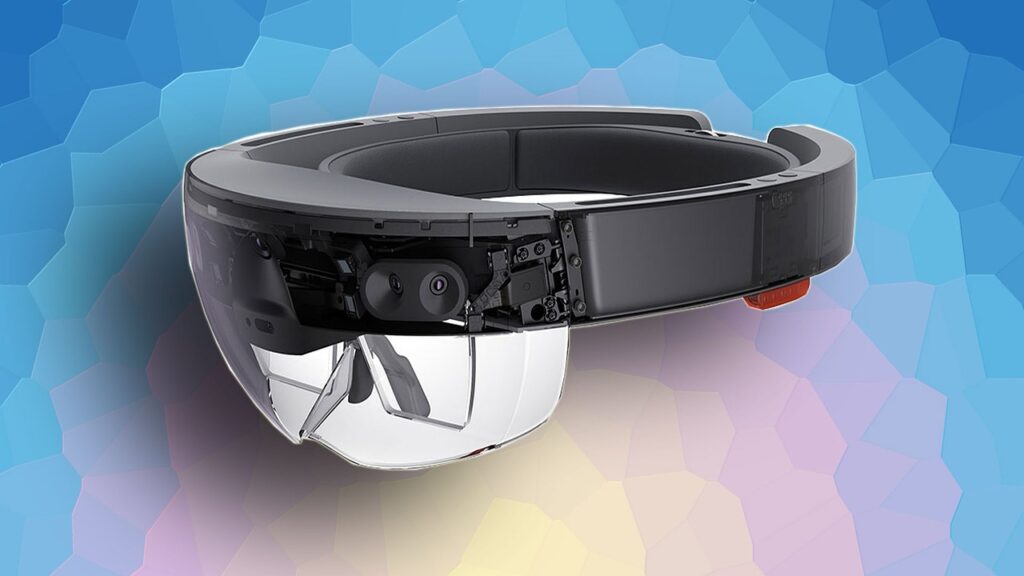

Imagine walking into a conference room in downtown Seattle, headset on, expecting a seamless blend of 3D holograms and real objects. Instead, the hologram flickers, the tracking drifts, and the meeting stalls while everyone waits for the tech to catch up. The promise of mixed reality (MR) feels just out of reach, leaving teams frustrated and investors skeptical.
📝 Article Overview
Common Challenges With Mixed Reality (honest take)?
Unreliable Spatial Mapping
The environment often appears as a patchwork of inaccurate meshes. Sensors struggle with reflective surfaces, low lighting, or cluttered spaces, causing the virtual overlay to misalign. environment often appears
These errors stem from limited depth‑camera resolution and algorithms that were trained on idealized lab environments, not the chaotic reality of office floors.
Heavy, Uncomfortable Headsets
Even the latest MR headsets can weigh 1.2 kilograms, causing neck strain after an hour of use. Batteries last only 2‑3 hours, forcing frequent breaks.
The bulk comes from high‑resolution displays, powerful processors, and cooling systems packed into a single unit, leaving ergonomics as an afterthought. highresolution displays powerful
Fragmented Development Ecosystem
Developers must choose between Unity, Unreal, or proprietary SDKs, each with its own quirks. Porting an app from one platform to another can double development time.
This fragmentation exists because hardware manufacturers guard their own APIs, hoping to lock in customers, which stalls cross‑platform consistency.
Cost Barriers for Enterprises
A single headset can cost $3,500, and full deployments require servers, networking upgrades, and custom content creation—easily surpassing $100,000 for midsize firms. full deployments require
The high price tag reflects not only the hardware but also the scarcity of skilled MR designers who can produce compelling experiences.
Limited Content Library
Unlike VR, which boasts thousands of games, MR still relies on niche business apps and a handful of consumer demos. Users often find nothing relevant to their daily workflow.
Content creators hesitate because the market is small and ROI is uncertain, creating a chicken‑and‑egg problem. Content creators hesitate
Key Mixed Reality Advancements
1. Light‑Field Displays for True Depth Perception
Light‑field technology projects multiple focal planes, allowing eyes to focus naturally on virtual objects. To implement, select a headset that supports light‑field optics, calibrate the eye‑tracking module, and integrate the SDK’s depth rendering pipeline.
- Why It Works:
- Reduces eye strain by mimicking real‑world focus cues.
- Improves realism of occlusion and shadows.
- Enables smoother hand‑eye coordination for precise tasks.
2. Edge‑AI Powered Spatial Mapping
On‑device AI chips now process point‑cloud data in real time, delivering sub‑centimeter accuracy. Deploy by updating the headset firmware, enabling the edge‑AI module, and training the mapping model with local environment samples.
- Why It Works:
- Eliminates latency caused by cloud processing.
- Adapts to dynamic lighting and moving objects.
- Scales across multiple devices without bandwidth bottlenecks.
3. Modular, Lightweight Form Factors
Manufacturers are separating the display module from the compute module, using a thin tether or wireless link. To adopt, purchase a modular kit, attach the lightweight visor, and sync with a compact compute pack. compute module using
- Why It Works:
- Reduces headset weight by up to 40%.
- Extends battery life via external power options.
- Allows upgrades without replacing the entire headset.
4. Cross‑Platform Development Frameworks
Open‑source projects like OpenXR now provide a unified API across major headsets. Developers should install the latest OpenXR runtime, migrate existing Unity scenes to the OpenXR plugin, and test on at least two devices.
- Why It Works:
- Cuts code duplication by 60%.
- Ensures consistent input handling.
- Future‑proofs apps against hardware changes.
5. Subscription‑Based Content Marketplaces
Platforms now offer curated MR app libraries on a SaaS model, charging per seat per month. Organizations can subscribe, select relevant modules, and deploy instantly via MDM tools.
- Why It Works:
- Lowers upfront investment.
- Provides continuous updates and support.
- Encourages developers to create niche solutions.
6. Integrated Hand‑Tracking with Haptic Feedback
New sensor arrays capture finger articulation, while localized haptic actuators simulate touch. To integrate, enable the hand‑tracking SDK, map gestures to UI actions, and calibrate haptic intensity per user preference. sensor arrays capture
- Why It Works:
- Eliminates the need for controllers.
- Boosts immersion through tactile cues.
- Improves accessibility for users with limited mobility.
| Approach | Old Way | Better Way | Result |
|---|---|---|---|
| Spatial Mapping | Reliant on cloud processing, laggy. | Edge‑AI on‑device mapping. | Sub‑centimeter accuracy, zero lag. |
| Hardware Weight | Monolithic, >1.2 kg. | Modular visor + compute pack. | Weight cut by 40%, comfort improved. |
| Development | Multiple SDKs, high porting cost. | OpenXR unified API. | Code reuse up to 60%. |
| Content Access | One‑off purchases, limited updates. | Subscription marketplace. | Continuous new apps, lower capex. |
| Interaction | Controller‑only, clunky. | Hand‑tracking with haptics. | Natural gestures, tactile feedback. |
Why People Are Paying Attention
At a manufacturing plant in Detroit, engineers used edge‑AI spatial mapping to overlay assembly instructions directly onto machinery, cutting error rates from 12% to 3% within two weeks.
In a remote‑learning pilot at a university in Boston, students wearing light‑field MR headsets reported a 45% increase in retention of complex anatomy compared to traditional 2D slides.
A logistics firm in Rotterdam deployed modular MR units for warehouse pickers, reducing average pick time by 18 seconds per item and saving roughly €250,000 annually.
A design studio in Berlin adopted the subscription marketplace, gaining instant access to a library of 150 MR plugins, which accelerated client presentations and won three new contracts.
Healthcare providers in Toronto integrated hand‑tracking with haptic feedback for physical therapy, noting a 30% faster recovery rate for patients with stroke‑related motor deficits.
Step-by-Step Action Plan
- Audit current workflow gaps where visual context is missing; identifying these spots clarifies where MR adds value.
- Select a lightweight modular headset that supports OpenXR; this ensures future‑proof hardware compatibility.
- Enable edge‑AI mapping in the device settings; doing so removes reliance on slow cloud services.
- Install the OpenXR runtime and import the OpenXR plugin into your Unity project; this unifies input handling across devices.
- Prototype a single use‑case using hand‑tracking and haptic feedback; a focused demo proves feasibility before scaling.
- Subscribe to a curated MR content marketplace for ready‑made modules; this speeds up deployment and reduces development cost.
- Measure key performance indicators (error rate, time saved, user satisfaction) after rollout; data validates ROI and guides iteration.
Final Thoughts
Mixed reality is no longer a futuristic novelty; it is an evolving tool that, when applied with the right advances, solves real‑world problems. The technology still wrestles with weight, cost, and content scarcity, but recent breakthroughs are rapidly tipping the balance. Organizations that adopt a pragmatic, step‑wise approach will find MR becoming a competitive advantage rather than a costly experiment.