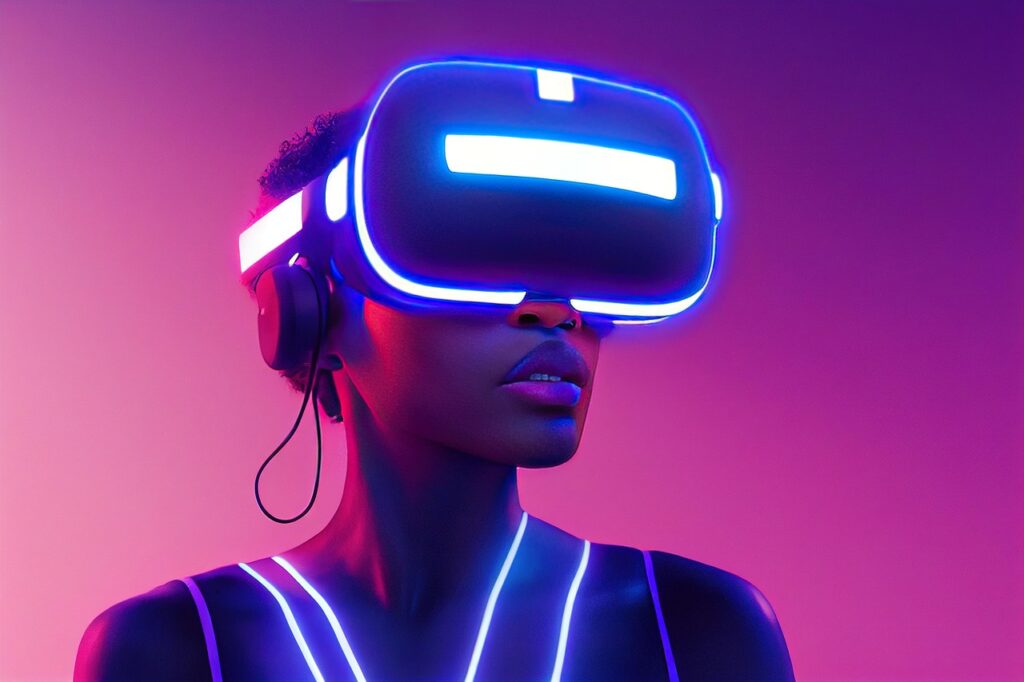

Imagine walking into a museum and, with the aid of your smartphone, being able to see detailed information about each piece of art, including the artist’s inspiration, the materials used, and even a step-by-step guide on how the piece was created. This isn’t just a fantasy; it’s the reality of what augmented reality (AR) can offer. AR has the power to blend the digital and physical worlds, enhancing our experiences in countless ways. From education and entertainment to healthcare and marketing, AR is transforming industries and aspects of life. Here’s the key thing to understand: AR is not just about overlaying digital information onto the real world; it’s about creating immersive, interactive experiences that change how we perceive and engage with reality. Most people miss this when they first explore AR, focusing on its novelty rather than its profound potential. With the rapid advancement in technology, AR is becoming more sophisticated, offering advanced strategies that can be applied in various contexts.
&#; What's In This Article
Defining Augmented Reality
Augmented reality is a technology that superimposes digital information onto the physical world, using the camera on a device such as a smartphone or a tablet. It uses the device’s camera to display the real world and then adds virtual information on top of it. This can include images, videos, audio, or even 3D models. Unlike virtual reality, which creates a completely artificial environment, AR enhances the real world by adding layers of digital information to it. AR experiences can range from simple text overlays to complex, interactive 3D models. The technology has been around for several decades but has only recently become widely accessible and affordable for consumer use, thanks to advancements in smartphone technology and the development of AR software development kits (SDKs) like ARKit and ARCore.
One of the most significant aspects of AR is its ability to be used in a wide range of applications. From helping students better understand complex concepts in the classroom to assisting surgeons during operations, AR has the potential to improve efficiency, reduce costs, and enhance user experiences across various industries. Here is a comparison of AR with other related technologies:
| Technology | Description | Key Features |
|---|---|---|
| Augmented Reality (AR) | Overlays digital information onto the physical world. | Interactive, enhances real-world experiences. |
| Virtual Reality (VR) | Creates a completely artificial environment. | Immersive, isolates user from real world. |
| Mixed Reality (MR) | Combines elements of AR and VR. | Interactive, blends physical and digital worlds seamlessly. |
| Internet of Things (IoT) | Network of physical devices connected to the internet. | Enhances device capability, automates tasks. |
Leading Augmented Reality Solutions
1. Marker-Based Tracking
Marker-based tracking is one of the most common methods used in AR for recognizing and tracking the location of objects in the real world. This method involves the use of a marker, such as a QR code or a specific image, that the device’s camera recognizes. Once the marker is detected, the AR system can overlay digital information onto it. This technique is widely used in various applications, including education, marketing, and gaming. For instance, a student could point their device’s camera at a picture in a textbook, and the device could display a video or interactive 3D model related to the topic.
The precision of marker-based tracking has made it a preferred choice for applications where accuracy is crucial. However, it requires the physical presence of a marker, which can sometimes limit its applicability. Despite this, advancements in markerless tracking are expanding the possibilities of AR further.
- Plus Points:
- High accuracy in tracking and recognition.
- Wide range of applications across industries.
- Easy to implement with current technology.
2. Markerless Tracking
Markerless tracking, also known as markerless AR, does not require any specific marker or image to function. Instead, it uses the device’s camera to detect and track features in the environment, such as edges, corners, or textures. This allows for a more flexible and spontaneous AR experience, as users are not limited by the need for a predefined marker. Markerless tracking is particularly useful in applications where the environment is dynamic or where markers cannot be placed, such as in outdoor navigation or in situations requiring quick AR deployment.
Despite its advantages, markerless tracking can be more complex and computationally intensive than marker-based tracking, requiring more powerful devices to operate smoothly. However, with advancements in hardware and software, its capabilities and efficiency are continually improving.
- Plus Points: Plus Points
- Offers greater flexibility in application use.
- Can be used in dynamic or marker-less environments.
- Enhances user experience with more spontaneous interactions.
3. Light Estimation
Light estimation is a technique used in AR to understand the lighting conditions of the real world and apply them to the virtual objects being overlaid. This ensures that the digital information appears more realistic and seamlessly integrated into the physical environment. By accurately estimating the lighting, AR systems can simulate how light would naturally interact with virtual objects, making the AR experience more believable and immersive.
Light estimation is crucial for creating high-quality AR experiences, especially in applications where visual fidelity is key, such as in architectural visualizations or product demonstrations. However, achieving accurate light estimation can be challenging, especially in environments with complex or changing lighting conditions.
- Plus Points:
- Enhances the realism of AR experiences.
- Improves the integration of virtual objects into real-world environments.
- Crucial for applications requiring high visual fidelity.
4. Plane Detection
Plane detection is another vital feature of AR, enabling devices to identify and track flat surfaces in the real world. This capability is essential for placing virtual objects in a way that appears realistic and interactive. For example, an AR app could use plane detection to allow users to place virtual furniture in a room, seeing how it would look without actually having to move any physical objects.
Plane detection has a wide range of applications, from home decor and architecture to gaming and education. It simplifies the process of creating interactive and immersive AR experiences, making it more accessible to developers and users alike.
- Plus Points:
- Facilitates the creation of realistic and interactive AR experiences.
- Essential for applications involving spatial awareness and object placement.
- Simplifies the development process for AR applications.
5. Facial Recognition
Facial recognition technology in AR enables devices to not only detect faces but also to track facial expressions and emotions. This capability opens up new avenues for interactive and personalized AR experiences, such as virtual try-on features in beauty and fashion apps, where users can see how different makeup looks or clothing items would appear on them without actually applying or wearing them.
Facial recognition in AR also has potential applications in fields like healthcare, where it could be used to analyze facial expressions for signs of pain or distress, or in education, to gauge students’ engagement and understanding of material. However, the use of facial recognition raises important questions about privacy and data protection.
- Plus Points:
- Enables personalized and interactive AR experiences.
- Has a wide range of applications across industries.
- Can be used for both entertainment and serious applications like healthcare and education.
Why This Matters to You
✔ Enhanced User Experience
AR has the potential to significantly enhance user experiences across various platforms and applications. By overlaying digital information onto the real world, AR can make interactions more intuitive, engaging, and informative. This can lead to higher user satisfaction and a more immersive experience, whether in entertainment, education, or other areas.
✔ Increased Efficiency
AR can streamline processes and increase efficiency in both personal and professional settings. For example, AR can guide technicians through complex repair procedures, reduce the time spent on training in various industries, and even assist in navigation, making it easier to find locations or understand spatial relationships.
✔ Improved Learning Outcomes
The interactive and immersive nature of AR makes it an invaluable tool for education. AR can help students better understand complex concepts by visualizing them in 3D, engaging with historical events in a more tangible way, or practicing skills in a simulated environment. This can lead to improved learning outcomes, as students are more likely to be engaged and retain information when learning is made fun and interactive.
✔ Enhanced Creativity
AR opens up new avenues for creativity, allowing artists, designers, and individuals to express themselves in innovative ways. Whether it’s creating interactive art installations, designing virtual clothing, or crafting immersive stories, AR provides a platform that blurs the line between the physical and digital, enabling new forms of artistic expression.
✔ Better Decision Making
AR can provide users with critical information at the right time and place, enabling better decision-making. For instance, in retail, AR can help consumers see how furniture would look in their home before making a purchase. In healthcare, AR can assist doctors by providing them with patient information and medical histories during operations.
✔ Increased Accessibility
AR has the potential to make information and services more accessible to a wider audience. It can help people with disabilities by providing auditory descriptions of visual information, translating sign language into spoken language, or assisting with navigation in unfamiliar environments.
The Next 5 Years
- Advancements in AR Hardware
- Increased Adoption in Education
- Expansion into New Industries
- Advancements in AR Software
- Integration with Other Technologies
Over the next five years, significant advancements are expected in AR hardware, including improvements in display technology, tracking systems, and processing power. These advancements will enable more sophisticated and seamless AR experiences, making AR more accessible and user-friendly for the masses.
This could lead to the development of AR glasses or contact lenses that are indistinguishable from regular eyewear but offer a full range of AR capabilities, further blurring the line between the digital and physical worlds.
As AR technology becomes more affordable and accessible, its adoption in educational settings is expected to increase. Teachers and educators will find more innovative ways to integrate AR into their lesson plans, making learning more engaging, interactive, and effective.
This could involve the creation of AR-enabled textbooks, interactive historical recreations, or even virtual labs where students can conduct experiments in a safe and controlled environment.
While AR is already being used in several industries, the next five years will see its expansion into new areas, including construction, agriculture, and environmental conservation. In these sectors, AR can improve efficiency, reduce costs, and enhance decision-making capabilities.
For example, in construction, AR can be used to visualize building plans, detect potential structural issues, and guide workers through complex assembly processes. In agriculture, AR can help farmers monitor crop health, detect pests and diseases, and optimize irrigation and fertilization.
Parallel to the advancements in hardware, AR software will also see significant developments. Improved AR SDKs, better content creation tools, and more sophisticated analytics will make it easier for developers to create high-quality AR experiences and for businesses to understand and use AR’s potential.
This could lead to the creation of more complex and interactive AR experiences, including multiplayer AR games, social AR platforms, and immersive AR stories that change based on user interaction.
The future of AR is closely tied to its integration with other emerging technologies, such as artificial intelligence (AI), the Internet of Things (IoT), and blockchain. These integrations will enable AR to tap into vast amounts of data, learn from user behavior, and provide secure and transparent interactions.
For instance, integrating AR with AI can enable AR systems to learn from user interactions and adapt AR experiences accordingly. Combining AR with IoT can create smart environments where physical objects and spaces are enriched with digital information and capabilities.
| Industry | Current Use of AR | Future Potential |
|---|---|---|
| Education | Interactive textbooks, virtual labs. | Personalized learning, remote training. |
| Retail | Virtual try-on, product demos. | Smart showrooms, AR-based customer service. |
| Healthcare | Surgical training, patient education. | AR-assisted surgeries, remote health monitoring. |
| Construction | Building visualization, site monitoring. | AR-guided construction, automated site inspection. |
What It All Means
Augmented reality represents a significant shift in how we interact with information and our surroundings. With its ability to enhance the real world by overlaying digital information onto it, AR is poised to revolutionize numerous aspects of life and industry. As technology continues to evolve and become more accessible, the potential applications and benefits of AR will only continue to grow, offering new opportunities for interaction, education, and innovation. AR’s impact will be felt across generations, changing the way we learn, work, and entertain ourselves. Ultimately, the future of AR is not just about the technology itself, but about the experiences it enables and the ways in which it can improve our lives.




Pingback: Wearable Technology Trends – ciphora.online
Pingback: Revolutionize Blogging with Expert Tips – ciphora.online
Pingback: Augmented Reality: Enhancing Human Experience – ciphora.online
Pingback: Mixed Reality Explained – ciphora.online
Pingback: Mastering Tech Tutorials – ciphora.online
Pingback: Software Tutorials: Avoiding Common Mistakes – ciphora.online