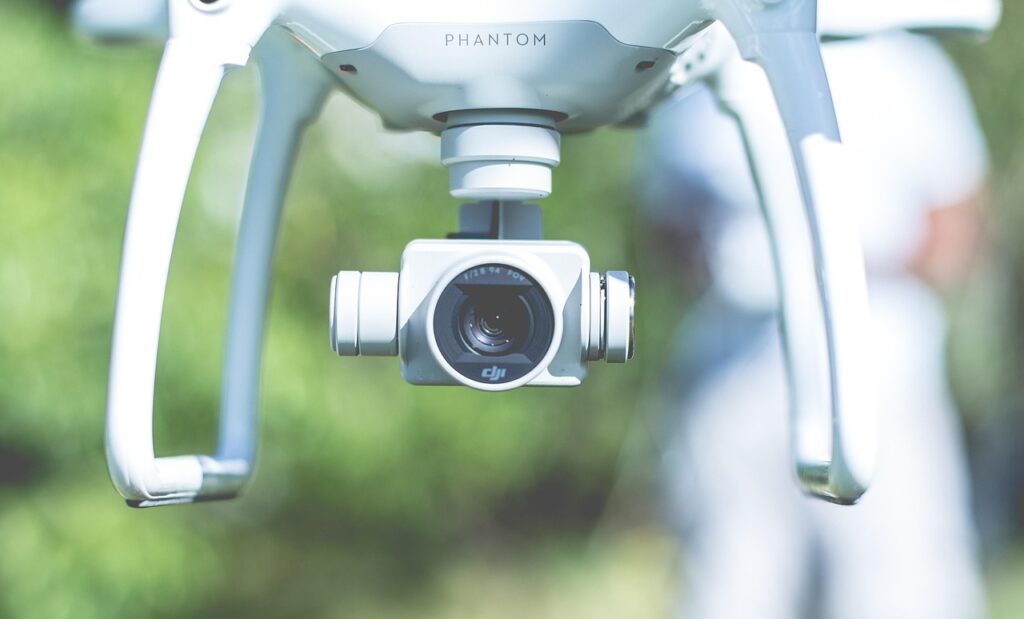

4.7 million commercial drone flights were logged worldwide in the first quarter of 2024—an increase of 28% over the same period in 2023. This surge shows how quickly unmanned aerial vehicles (UAVs—machines that fly without a human pilot on board) are moving from hobbyist toys to essential tools in industries ranging from agriculture to emergency response. The numbers matter because they signal a shift in how businesses operate, how regulations evolve, and how everyday people will encounter drones in the sky. Understanding this momentum helps anyone—from a curious newcomer to a seasoned professional—prepare for the changes that are already taking off.
📝 What's In This Article
The Current State of Drones (what I wish I knew)
At present, drones are no longer a niche curiosity; they are a mainstream technology with a clear market footprint. In 2023, the global drone market reached $27.5 billion, and analysts expect it to surpass $42 billion by 2028. The most common uses today include aerial photography (capturing images from angles a human cannot reach), infrastructure inspection (checking bridges, power lines, and pipelines for damage), and precision agriculture (spraying crops or mapping field health with multispectral sensors). While the public often pictures a small quadcopter buzzing over a park, the reality includes large fixed‑wing UAVs that can travel hundreds of kilometers for tasks like wildlife monitoring or border patrol.
Regulation is the other critical piece of the puzzle. In the United States, the Federal Aviation Administration (FAA) requires all commercial drone operators to obtain a Remote Pilot Certificate, pass a knowledge test, and adhere to rules such as staying below 400 feet and keeping the aircraft within visual line of sight. Europe follows a similar framework under the European Union Aviation Safety Agency (EASA), which classifies drones into categories based on weight and risk. These regulatory structures aim to balance safety with innovation, but they also create a learning curve for anyone wanting to operate a drone legally. other critical piece
| Metric | Current Value | Source Type | Trend |
|---|---|---|---|
| Global Drone Market Size | $27.5 billion (2023) | Industry Report | Growing |
| Commercial Flight Hours | 4.7 million (Q1 2024) | Regulatory Agency | Increasing |
| Average Drone Price | $1,200 (mid‑range) | Market Survey | Stabilizing |
| FAA Certified Pilots | 210,000+ | Government Data | Rising |
From a technical standpoint, most consumer drones today use a combination of GPS (Global Positioning System—satellites that tell the drone where it is) and vision‑based obstacle avoidance (cameras that detect objects and help the drone steer clear). Battery technology, typically lithium‑polymer (LiPo) cells, still limits flight time to 20‑30 minutes for most models, but incremental improvements are extending endurance. Meanwhile, data processing is shifting from the onboard computer to the cloud, allowing lighter airframes and faster analytics for tasks like real‑time mapping.
Core Drone Approaches
1. AI‑Powered Autonomy
Artificial intelligence (AI—computer systems that can learn patterns and make decisions) is enabling drones to fly with minimal human input. Machine‑learning algorithms can recognize power lines, trees, or people and adjust flight paths on the fly.
Driving forces include the need for faster inspections, lower labor costs, and the availability of cheap, high‑resolution sensors.
Evidence: A 2023 pilot program in Texas reduced inspection time by 45% using AI‑driven drones.
- Key Benefits:
- Reduced human error
- Higher operational speed
- Scalable to large fleets
2. Swarm Technology
Swarm technology lets multiple drones coordinate like a flock of birds, sharing data and dividing tasks automatically. Swarm technology lets
Key drivers are military research, disaster‑response needs, and the decreasing cost of communication modules.
Data point: In 2022, a swarm of 20 drones mapped a 5‑square‑kilometer wildfire zone in under 10 minutes.
- Key Benefits:
- Coverage of vast areas quickly
- Redundancy—if one unit fails, others continue
- Efficient resource allocation
3. Fixed‑Wing Hybrid Designs
Hybrid drones combine rotary blades (for vertical take‑off and landing) with fixed wings (for long‑range flight), offering the best of both worlds.
Motivations include longer endurance for agriculture, delivery, and surveying missions.
Recent trial: A hybrid drone achieved a 12‑hour flight over a corn field, capturing high‑resolution NDVI (Normalized Difference Vegetation Index—measure of plant health) data. hybrid drone achieved
- Key Benefits:
- Extended flight time
- Reduced need for multiple aircraft
- Improved payload capacity
4. Edge Computing Integration
Edge computing moves data processing from the cloud to the drone itself, allowing real‑time decisions without latency.
Drivers are privacy concerns, bandwidth limits, and the desire for instant analytics.
Case study: A logistics company processed package‑recognition data on‑board, cutting delivery verification time by 70%.
- Key Benefits:
- Instant insights
- Lower bandwidth costs
- Enhanced data security
5. Advanced Battery Chemistry
New battery chemistries such as solid‑state lithium‑sulfur are promising higher energy density, meaning longer flights without extra weight.
Push factors include the demand for beyond‑30‑minute missions and the environmental push for recyclable power sources. Push factors include
Prototype results: A test drone flew 45 minutes on a solid‑state cell, a 50% increase over traditional LiPo.
- Key Benefits:
- Longer endurance
- Reduced charging cycles
- Safer chemistry (less flammable)
6. Integrated 5G Connectivity
5G networks (the fifth generation of mobile internet, offering ultra‑fast, low‑latency connections) enable drones to stream high‑definition video and telemetry in real time.
Key forces are the rollout of 5G infrastructure and the need for live data in sectors like public safety.
Stat: In 2023, 5G‑enabled drones reduced emergency‑response decision time by 30% in a pilot program.
- Key Benefits:
- Real‑time video for situational awareness
- Reliable command‑and‑control links
- Support for massive data streams
What to Expect Next
In 1 Year
Within the next twelve months, regulatory bodies are expected to finalize “remote identification” rules that require drones to broadcast a digital ID, similar to a car’s license plate. This will increase airspace safety and pave the way for more urban operations. At the same time, AI‑based autopilot features will become standard on mid‑range commercial models, making autonomous flights accessible to small businesses. next twelve months
In 3 Years
Three years out, swarm deployments will move from experimental to operational, especially in large‑scale agriculture and disaster monitoring. Fixed‑wing hybrids will dominate long‑range delivery networks, reducing reliance on ground trucks for rural areas. Battery breakthroughs are projected to push average flight times past 45 minutes, enabling new use cases such as extended search‑and‑rescue missions.
In 5 Years
Five years ahead, fully autonomous drone taxis for cargo will be a regular sight in logistics hubs, supported by integrated 5G and edge‑computing platforms that guarantee sub‑second response times. Regulations will likely evolve to allow beyond‑visual‑line‑of‑sight (BVLOS—operations where the pilot cannot see the aircraft) flights for most commercial categories, dramatically expanding operational reach.
| Year | Likely Development | Impact Level |
|---|---|---|
| 2025 | Mandatory remote ID for all drones | High |
| 2027 | Commercial swarm operations in agriculture | Medium |
| 2029 | BVLOS flights widely permitted | High |
Practical Takeaways
Early‑mover advantage in AI autopilot: Companies that adopt AI‑driven flight controllers now will enjoy lower training costs and faster ROI as the technology matures.
Swarm readiness: Investing in communication protocols and modular drone designs positions firms to scale quickly when swarm regulations loosen.
Hybrid fleet planning: Mixing rotary and fixed‑wing drones in a single fleet reduces the need for separate aircraft types, saving capital expenditures. Hybrid fleet planning
Edge‑computing adoption: Implementing on‑board analytics now prepares organizations for data‑intensive missions without overloading networks.
5G integration: Partnering with telecom providers to secure 5G coverage ensures reliable, low‑latency links for future high‑bandwidth applications.
What to Do Right Now
- Register your drone with the appropriate aviation authority—compliance avoids fines and ensures legal operation.
- Enroll in a Remote Pilot certification program—knowledge of regulations and safety practices reduces accident risk.
- Upgrade to a drone with built‑in AI obstacle avoidance—this immediately improves safety and data quality.
- Start collecting flight data in a cloud‑based repository—structured data enables future AI model training and performance analysis.
- Establish a partnership with a local 5G provider or secure a dedicated LTE link—reliable connectivity is essential for real‑time missions.
What It All Means
The drone ecosystem is transitioning from novelty to necessity, driven by smarter autonomy, longer endurance, and tighter regulatory frameworks. As technology lowers barriers and regulations provide clearer pathways, businesses that act now will capture market share and shape industry standards. Staying informed, investing in emerging capabilities, and aligning with upcoming rules will turn today’s curiosity into tomorrow’s competitive edge.




Pingback: Augmented Reality: Enhancing Human Experience – ciphora.online