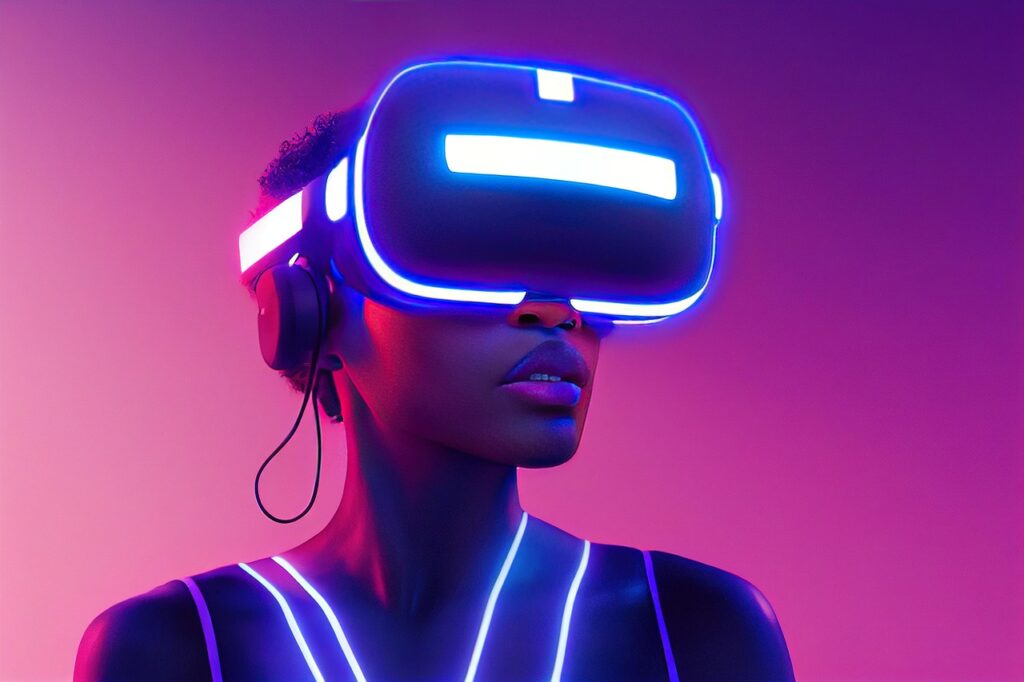

According to a recent report, the global virtual reality (VR) market is projected to reach $1.5 billion by 2025 – a significant increase from its current value, driven by advancements in VR technology and its increasing adoption across various industries. Virtual reality, which refers to a computer-generated simulation of a three-dimensional environment – essentially, a digital world that users can interact with in a seemingly real or physical way, is being used in fields such as education, healthcare, and entertainment. For instance, medical students are using VR to practice surgeries in a simulated environment, which helps reduce the risk of errors and improves their skills. Moreover, the use of VR in therapy sessions has shown promising results in treating patients with anxiety disorders and PTSD. Additionally, the rise of VR gaming has opened up new avenues for social interaction and community building among gamers. However, despite its potential, VR technology still faces challenges related to accessibility and affordability.
📝 In This Post
The Current State of Virtual Reality (real examples)
Currently, VR technology is being used in various industries, including gaming, education, and healthcare. For example, VR headsets like Oculus Rift and HTC Vive are popular among gamers, offering an immersive gaming experience. In education, VR is being used to create interactive and engaging learning experiences for students. In healthcare, VR is being used for therapy sessions, medical training, and patient education. The current state of VR technology can be characterized by its increasing adoption, advancements in hardware and software, and the development of new applications.
The table below summarizes some key statistics and metrics related to the current state of VR technology:
| Metric | Current Value | Source Type | Trend |
|---|---|---|---|
| Number of VR headsets sold in 2022 | 5 million | Market research report | Increasing |
| VR market size in 2022 | $1.1 billion | Industry analysis | Growing |
| Number of VR games available on Steam | 1000+ | Steam store data | Expanding |
| VR adoption rate in education | 20% | Survey of educators | Increasing |
As the table shows, the VR market is growing, with an increasing number of headsets being sold and a rising number of VR games available. Additionally, VR is being adopted in education and other industries, indicating its potential for widespread use.
Top Virtual Reality Innovations to Know
1. Standalone VR Headsets
Standalone VR headsets, which do not require a PC or console to operate, are becoming increasingly popular. These headsets, such as the Oculus Quest, offer a wireless and portable VR experience. The driving force behind this trend is the advancement in hardware and software technology, which has enabled the development of high-quality, standalone VR headsets. For example, the Oculus Quest has a high-resolution display and advanced tracking technology, making it an attractive option for consumers. The advantages of standalone VR headsets include:
- Portability and convenience
- Wireless and easy to use
- Affordable compared to PC-based VR systems
2. Social VR Platforms
Social VR platforms, which allow users to interact with each other in virtual environments, are emerging as a new trend in VR technology. These platforms, such as VRChat and AltspaceVR, enable users to create their own avatars and interact with others in real-time. The driving force behind this trend is the increasing demand for social interaction and community building in VR. For example, VRChat has seen a significant increase in user engagement, with users spending hours interacting with each other in virtual environments. The advantages of social VR platforms include:
- Enables social interaction and community building
- Provides a platform for users to express themselves and connect with others
- Offers a unique and immersive experience
3. VR Training and Education
VR training and education are becoming increasingly popular, with many organizations using VR to train employees and students. VR training, which simulates real-world environments and scenarios, can be more effective than traditional training methods. The driving force behind this trend is the need for more effective and engaging training methods. For example, the US military is using VR to train soldiers in a simulated environment, which has shown to be more effective than traditional training methods. The advantages of VR training and education include: becoming increasingly popular
- Provides an immersive and engaging experience
- Can be more effective than traditional training methods
- Offers a safe and controlled environment for training
4. VR Healthcare Applications
VR healthcare applications, which include therapy sessions, patient education, and medical training, are emerging as a new trend in VR technology. These applications, which simulate real-world environments and scenarios, can be more effective than traditional methods. The driving force behind this trend is the need for more effective and engaging healthcare applications. For example, VR therapy sessions have shown to be effective in treating patients with anxiety disorders and PTSD. The advantages of VR healthcare applications include:
- Provides an immersive and engaging experience
- Can be more effective than traditional methods
- Offers a safe and controlled environment for therapy and training
5. VR Gaming Innovations
VR gaming innovations, which include new genres and gameplay mechanics, are emerging as a new trend in VR technology. These innovations, which simulate real-world environments and scenarios, can provide a unique and immersive experience for gamers. The driving force behind this trend is the increasing demand for new and innovative VR games. For example, the VR game ‘Beat Saber’ has become a hit among gamers, offering a unique and immersive experience. The advantages of VR gaming innovations include:
- Provides a unique and immersive experience
- Offers new genres and gameplay mechanics
- Can be more engaging than traditional games
6. VR Hardware Advancements
VR hardware advancements, which include improvements in display resolution, tracking technology, and controllers, are emerging as a new trend in VR technology. These advancements, which enable higher-quality and more immersive VR experiences, are driving the growth of the VR market. The driving force behind this trend is the need for more advanced and sophisticated VR hardware. For example, the Oculus Rift S has a high-resolution display and advanced tracking technology, making it a popular choice among consumers. The advantages of VR hardware advancements include: hardware advancements which
- Enables higher-quality and more immersive VR experiences
- Provides advanced tracking technology and controllers
- Offers improved display resolution and field of view
Emerging Directions
1. Short-Term Developments (1 year)
In the next year, VR technology is expected to continue its growth, with advancements in hardware and software. The development of new VR headsets, such as the Oculus Quest 2, is expected to drive the growth of the VR market. Additionally, the increasing adoption of VR in education and healthcare is expected to continue, with more organizations using VR for training and therapy. The table below summarizes the likely developments in the next year:
| Year | Likely Development | Impact Level |
|---|---|---|
| 2024 | Advancements in VR hardware and software | High |
| 2024 | Increasing adoption of VR in education and healthcare | Medium |
| 2024 | Development of new VR headsets | High |
2. Medium-Term Developments (3 years)
In the next three years, VR technology is expected to become more mainstream, with advancements in hardware and software enabling more widespread adoption. The development of new VR applications, such as social VR platforms and VR training programs, is expected to drive the growth of the VR market. Additionally, the increasing use of VR in industries such as entertainment and education is expected to continue, with more organizations using VR for training and entertainment. The impact of these developments is expected to be significant, with VR technology becoming an integral part of many industries.
3. Long-Term Developments (5 years)
In the next five years, VR technology is expected to become even more advanced, with the development of new technologies such as augmented reality (AR) and mixed reality (MR). These technologies, which combine elements of VR and the real world, are expected to enable new and innovative applications, such as AR glasses and MR headsets. The impact of these developments is expected to be significant, with VR and AR technology becoming an integral part of many aspects of life, including entertainment, education, and healthcare.
The Impact on Consumers
Consumers are expected to benefit from the advancements in VR technology, with more affordable and accessible VR headsets and applications becoming available. For example, the Oculus Quest 2 is expected to be more affordable than its predecessor, making it more accessible to consumers. Additionally, the development of new VR applications, such as social VR platforms and VR training programs, is expected to provide consumers with new and innovative experiences.
Early adopters of VR technology are expected to benefit from the advancements in VR hardware and software, with more advanced and sophisticated VR experiences becoming available. For example, the development of new VR headsets, such as the Oculus Rift S, is expected to provide early adopters with higher-quality and more immersive VR experiences.
Consumers are also expected to benefit from the increasing use of VR in industries such as entertainment and education, with more VR content and applications becoming available. For example, the development of new VR games and experiences, such as ‘Beat Saber’ and ‘Job Simulator’, is expected to provide consumers with new and innovative entertainment options. applications becoming available
Moreover, consumers are expected to benefit from the development of new VR applications, such as VR therapy sessions and VR training programs, which can provide them with new and innovative ways to improve their health and skills. For example, the development of VR therapy sessions for anxiety disorders and PTSD is expected to provide consumers with a new and effective way to manage their mental health. training programs which
Furthermore, consumers are expected to benefit from the increasing adoption of VR in healthcare, with more VR applications and content becoming available for patient education and therapy. For example, the development of VR patient education programs is expected to provide consumers with a new and innovative way to learn about their health and manage their conditions. content becoming available
What to Do Right Now
- Invest in a VR headset, such as the Oculus Quest 2, to experience the latest VR technology and applications. The Oculus Quest 2 is a popular choice among consumers, offering a wireless and portable VR experience. By investing in a VR headset, consumers can experience the latest VR applications and content, including social VR platforms and VR training programs.
- Explore the latest VR applications and content, such as social VR platforms and VR training programs, to learn more about the benefits and potential of VR technology. For example, the social VR platform VRChat offers a unique and immersive experience, enabling users to create their own avatars and interact with others in real-time. By exploring the latest VR applications and content, consumers can learn more about the benefits and potential of VR technology and how it can be used in various industries.
- Consider using VR for training and education, such as VR training programs for employees or students, to improve skills and knowledge. For example, the VR training program ‘Job Simulator’ offers a unique and immersive experience, enabling users to practice and improve their job skills in a simulated environment. By using VR for training and education, consumers can improve their skills and knowledge, and organizations can benefit from more effective and engaging training methods.
- Stay up-to-date with the latest developments in VR technology, such as advancements in hardware and software, to stay ahead of the curve. For example, the development of new VR headsets, such as the Oculus Rift S, is expected to provide consumers with higher-quality and more immersive VR experiences. By staying up-to-date with the latest developments in VR technology, consumers can stay ahead of the curve and take advantage of new and innovative VR applications and content.
- Join online communities and forums, such as Reddit’s r/VR, to connect with other VR enthusiasts and learn more about the latest VR technology and applications. For example, the online community Reddit’s r/VR offers a platform for consumers to share their experiences and knowledge, and to learn from others. By joining online communities and forums, consumers can connect with other VR enthusiasts, learn more about the latest VR technology and applications, and stay up-to-date with the latest developments in the VR industry.
The Bottom Line
Virtual reality technology is transforming industries and revolutionizing the way people interact with information and each other. With its increasing adoption, advancements in hardware and software, and the development of new applications, VR technology is expected to become an integral part of many aspects of life, including entertainment, education, and healthcare. As VR technology continues to evolve and improve, it is likely to have a significant impact on consumers, providing them with new and innovative experiences, improving their skills and knowledge, and enhancing their overall quality of life.
The future of VR technology looks promising, with many experts predicting that it will become a mainstream technology in the next few years. As VR technology becomes more advanced and sophisticated, it is likely to have a significant impact on many industries, including entertainment, education, and healthcare. Consumers who adopt VR technology early are likely to benefit from its many advantages, including improved entertainment options, enhanced education and training, and better healthcare outcomes.
Overall, virtual reality technology is an exciting and rapidly evolving field that has the potential to transform many aspects of life. As it continues to grow and develop, it is likely to have a significant impact on consumers, providing them with new and innovative experiences, improving their skills and knowledge, and enhancing their overall quality of life. With its many advantages and potential applications, VR technology is an area that is definitely worth exploring and staying up-to-date with.