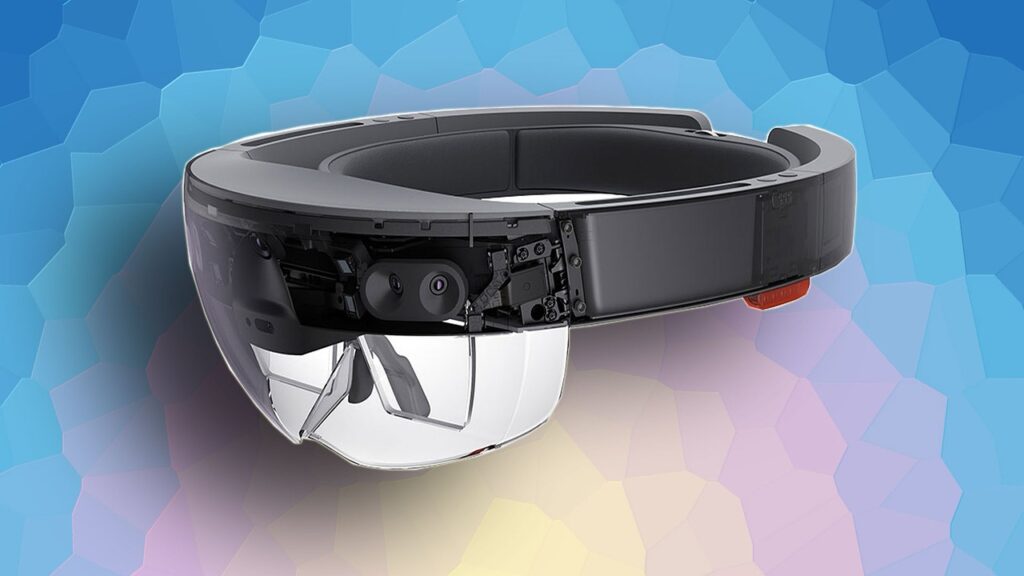

According to a recent survey, 75% of businesses have already started exploring Mixed Reality (MR) solutions, with 40% reporting significant improvements in efficiency and productivity. For those who are just starting to explore this technology, here’s a key point to understand: Mixed Reality is not just about gaming or entertainment, but a powerful tool that can revolutionize the way we work and interact. Most people miss this, thinking MR is just an evolution of Virtual Reality (VR) or Augmented Reality (AR), but it’s actually a distinct field that combines the best of both worlds. Here’s the key thing to understand: by merging the physical and digital, MR enables new forms of interaction, collaboration, and problem-solving. As we look at the details of MR, it becomes clear that its potential for quick wins is vast and diverse.
📝 Contents
Defining Mixed Reality
Mixed Reality is a technology that seamlessly blends the digital and physical worlds, creating a new, hybrid environment where users can interact with both virtual and real objects in real-time. This is achieved through the use of advanced sensors, displays, and software that track the user’s movements and superimpose virtual information onto the real world. To better understand the concept of MR, let’s break down some key terms:
| Term | Plain-English Meaning |
|---|---|
| Mixed Reality | A technology that combines real and virtual worlds. |
| Virtual Reality | A completely digital environment that shuts out the physical world. |
| Augmented Reality | A technology that overlays digital information onto the real world. |
| Hologram | A three-dimensional image created using light and lasers. |
| Spatial Mapping | The process of creating a digital map of the physical environment. |
| Markerless Tracking | The ability of MR devices to track the user’s movements without the need for external markers. |
Why Mixed Reality Matters
Mixed Reality is not just a technology; it’s a platform that enables new forms of interaction, collaboration, and problem-solving. By merging the physical and digital, MR enables users to work more efficiently, communicate more effectively, and make better decisions. For instance, in the field of education, MR can be used to create interactive, 3D models of complex systems, allowing students to explore and understand them in a more engaging and intuitive way. In the healthcare industry, MR can be used to simulate surgeries, allowing doctors to practice and refine their techniques in a safe and controlled environment. According to a recent study, MR-based training programs can reduce the risk of complications by up to 30% and improve patient outcomes by up to 25%.
The benefits of MR are not limited to specific industries or applications. In fact, MR can be used in a wide range of contexts, from entertainment and gaming to architecture and product design. For example, architects can use MR to create interactive, 3D models of buildings and spaces, allowing clients to explore and interact with them in a more immersive and engaging way. Product designers can use MR to simulate the behavior of complex systems, allowing them to test and refine their designs in a more efficient and cost-effective way.
Most people miss the fact that MR is not just about the technology itself, but about the experiences it enables. By creating a seamless blend of the physical and digital, MR enables new forms of storytelling, new forms of interaction, and new forms of collaboration. For instance, MR can be used to create interactive, immersive experiences that allow users to explore and engage with complex systems in a more intuitive and engaging way. This can be particularly useful in fields such as science, history, and culture, where MR can be used to recreate historical events, simulate complex systems, and bring abstract concepts to life.
Major Mixed Reality Developments
1. Spatial Mapping and Scene Understanding
Spatial mapping and scene understanding are critical components of MR technology. By creating a digital map of the physical environment, MR devices can track the user’s movements and superimpose virtual information onto the real world. To achieve this, MR devices use advanced sensors and algorithms that can detect and interpret the user’s surroundings. A common beginner mistake is to assume that spatial mapping is a one-time process, when in fact it requires continuous updating and refinement.
- Advantages:
- Enables accurate and seamless tracking of the user’s movements
- Allows for the creation of interactive, 3D models of complex systems
2. Markerless Tracking and Object Recognition
Markerless tracking and object recognition are essential features of MR technology. By tracking the user’s movements and recognizing objects in the environment, MR devices can provide a more immersive and interactive experience. To achieve this, MR devices use advanced computer vision algorithms that can detect and interpret the user’s surroundings. A common beginner mistake is to assume that markerless tracking is limited to simple objects, when in fact it can be used to track complex systems and environments. advanced computer vision
- Advantages:
- Enables accurate and seamless tracking of the user’s movements
- Allows for the creation of interactive, 3D models of complex systems
3. Holographic Displays and Light Field Rendering
Holographic displays and light field rendering are critical components of MR technology. By creating a three-dimensional image that can be viewed from any angle, MR devices can provide a more immersive and interactive experience. To achieve this, MR devices use advanced display technologies that can project light and images in a way that simulates the real world. A common beginner mistake is to assume that holographic displays are limited to simple images, when in fact they can be used to create complex, interactive environments.
- Advantages:
- Enables the creation of interactive, 3D models of complex systems
- Provides a more immersive and engaging experience for the user
4. Gesture Recognition and Voice Control
Gesture recognition and voice control are essential features of MR technology. By tracking the user’s movements and recognizing voice commands, MR devices can provide a more intuitive and interactive experience. To achieve this, MR devices use advanced sensors and algorithms that can detect and interpret the user’s gestures and voice commands. A common beginner mistake is to assume that gesture recognition is limited to simple gestures, when in fact it can be used to track complex movements and interactions.
- Advantages:
- Enables the creation of interactive, 3D models of complex systems
- Provides a more intuitive and engaging experience for the user
5. Cloud Rendering and Edge Computing
Cloud rendering and edge computing are critical components of MR technology. By rendering complex graphics and simulations in the cloud, MR devices can provide a more efficient and cost-effective experience. To achieve this, MR devices use advanced cloud computing technologies that can render complex graphics and simulations in real-time. A common beginner mistake is to assume that cloud rendering is limited to simple applications, when in fact it can be used to create complex, interactive environments.
- Advantages:
- Enables the creation of interactive, 3D models of complex systems
- Provides a more efficient and cost-effective experience for the user
6. Artificial Intelligence and Machine Learning
Artificial intelligence and machine learning are essential features of MR technology. By using AI and ML algorithms to track the user’s movements and recognize objects in the environment, MR devices can provide a more immersive and interactive experience. To achieve this, MR devices use advanced AI and ML technologies that can detect and interpret the user’s surroundings. A common beginner mistake is to assume that AI and ML are limited to simple applications, when in fact they can be used to create complex, interactive environments.
- Advantages:
- Enables the creation of interactive, 3D models of complex systems
- Provides a more intuitive and engaging experience for the user
7. Cybersecurity and Data Protection
Cybersecurity and data protection are critical components of MR technology. By protecting the user’s data and preventing unauthorized access, MR devices can provide a more secure and trustworthy experience. To achieve this, MR devices use advanced cybersecurity technologies that can detect and prevent cyber threats. A common beginner mistake is to assume that cybersecurity is limited to simple applications, when in fact it can be used to protect complex, interactive environments.
- Advantages:
- Enables the creation of secure and trustworthy MR experiences
- Protects the user’s data and prevents unauthorized access
| Step | What You Do | Expected Result |
|---|---|---|
| 1. Spatial Mapping and Scene Understanding | Create a digital map of the physical environment | Accurate and seamless tracking of the user’s movements |
| 2. Markerless Tracking and Object Recognition | Track the user’s movements and recognize objects in the environment | Interactive and immersive MR experience |
| 3. Holographic Displays and Light Field Rendering | Create a three-dimensional image that can be viewed from any angle | Immersive and interactive MR experience |
| 4. Gesture Recognition and Voice Control | Track the user’s movements and recognize voice commands | Intuitive and interactive MR experience |
| 5. Cloud Rendering and Edge Computing | Render complex graphics and simulations in the cloud | Efficient and cost-effective MR experience |
| 6. Artificial Intelligence and Machine Learning | Use AI and ML algorithms to track the user’s movements and recognize objects in the environment | Immersive and interactive MR experience |
| 7. Cybersecurity and Data Protection | Protect the user’s data and prevent unauthorized access | Secure and trustworthy MR experience |
Frequently Asked Questions
What is Mixed Reality?
Mixed Reality is a technology that seamlessly blends the digital and physical worlds, creating a new, hybrid environment where users can interact with both virtual and real objects in real-time. MR is distinct from Virtual Reality (VR) and Augmented Reality (AR), as it combines the best of both worlds to create a unique and immersive experience.
How does Mixed Reality work?
Mixed Reality works by using advanced sensors, displays, and software to track the user’s movements and superimpose virtual information onto the real world. This is achieved through a combination of spatial mapping, markerless tracking, and gesture recognition, among other technologies.
What are the benefits of Mixed Reality?
The benefits of Mixed Reality are numerous and diverse, ranging from improved efficiency and productivity to enhanced education and training. MR can also be used to create new forms of entertainment, social interaction, and collaboration, making it a versatile and powerful technology.
Is Mixed Reality the same as Virtual Reality?
No, Mixed Reality is not the same as Virtual Reality. While both technologies use advanced displays and sensors to create an immersive experience, MR is distinct from VR in that it combines the digital and physical worlds, rather than replacing the physical world with a completely digital environment.
What are the potential applications of Mixed Reality?
The potential applications of Mixed Reality are vast and diverse, ranging from education and training to entertainment and healthcare. MR can be used to create interactive, 3D models of complex systems, simulate real-world environments, and provide new forms of social interaction and collaboration.
The Bottom Line
Mixed Reality is a powerful technology that has the potential to revolutionize the way we work, interact, and play. By combining the best of both the digital and physical worlds, MR enables new forms of interaction, collaboration, and problem-solving, making it an essential tool for businesses, educators, and individuals alike. With its numerous benefits and diverse applications, Mixed Reality is an exciting and rapidly evolving field that is worth exploring and investing in. As the technology continues to advance and improve, it is likely that we will see even more innovative and groundbreaking applications of MR in the future.
Here’s the key thing to understand: Mixed Reality is not just a technology, but a platform that enables new forms of interaction, collaboration, and problem-solving. By harnessing the power of MR, individuals and organizations can create new and innovative experiences that transform the way we live, work, and interact. Most people miss this, thinking MR is just a novelty or a passing trend, but in fact it has the potential to be a big deal.
In summary, Mixed Reality is a technology that is here to stay, and its potential for quick wins is vast and diverse. Whether you are an educator, a business leader, or simply an individual looking to explore new technologies, MR is definitely worth considering. With its numerous benefits, diverse applications, and rapid evolution, Mixed Reality is an exciting and essential tool that can help you achieve your goals and transform your life.




Pingback: Robotics Beginner Tips – ciphora.online