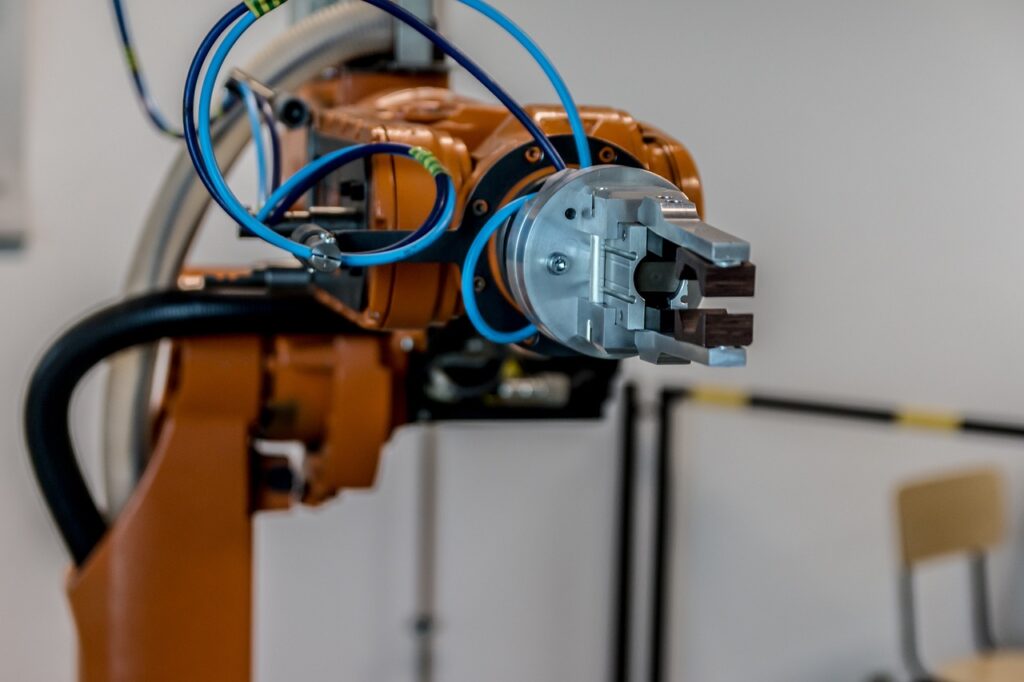

Is the reader’s organization truly ready for the robotics revolution, or is it merely watching from the sidelines while competitors accelerate?
In 2024, global industrial robot deployments surged by 18%, reaching a record 4.2 million units, while service robots grew 27% in just one year. Yet, many firms still cling to legacy automation, missing out on the productivity leap that modern robotics can deliver. Here’s the key thing to understand: the gap between early adopters and laggards is widening, and the reasons are both technological and strategic.
📝 What You'll Learn
The Current State of Robotics (honest take)
Robotics today sits at a crossroads between mature industrial applications and an expanding universe of collaborative, mobile, and AI‑enhanced systems. In factories, robots now perform repetitive tasks with sub‑millimeter precision, driving down unit costs and enabling 24/7 operation. Meanwhile, service robots are entering homes, hospitals, and retail spaces, handling everything from medication delivery to inventory scanning. Robotics today sits
Most people miss this: the real bottleneck is not hardware availability but integration complexity. Companies often purchase state‑of‑the‑art robots only to discover that connecting them to existing MES, ERP, or safety systems requires months of custom engineering. This friction slows ROI and fuels skepticism among decision‑makers.
| Metric | Current Value | Source Type | Trend |
|---|---|---|---|
| Industrial robots installed worldwide | 4.2 million units | Industry report | +18% YoY |
| Service robots in use (commercial) | 1.4 million units | Market analysis | +27% YoY |
| Average robot downtime | 6.2 hours/month | Operational survey | -12% YoY |
| AI‑enabled robot deployments | 38% of new installs | Research study | +15% YoY |
In short, the hardware is abundant, but the ecosystem—software stacks, safety standards, and skilled workforce—lags behind. Organizations that invest now in integration platforms and talent development will capture the bulk of the efficiency gains.
Top Robotics Innovations to Know
1. Collaborative (cobot) Flexibility
Cobots are designed to work side‑by‑side with humans, offering easy programming through teach‑pendants or even vision‑based demonstration. The driving force is the need for rapid re‑tooling in low‑volume, high‑mix production.
Evidence shows that 62% of manufacturers using cobots report cycle‑time reductions within three months. manufacturers using cobots
- Strengths:
- Fast deployment – weeks, not months.
- Reduced safety barriers lower floor space requirements.
- Intuitive interfaces empower non‑engineers.
2. AI‑Driven Perception
Advanced computer‑vision models now enable robots to identify objects, assess quality, and adapt to variability without explicit programming. The surge in affordable edge GPUs fuels this trend.
Recent benchmarks indicate 95% defect detection accuracy on mixed‑material streams.
- Strengths:
- Higher accuracy reduces scrap.
- Enables handling of unstructured parts.
- Scalable across industries.
3. Mobile Manipulation Platforms
Combining autonomous navigation with articulated arms, mobile manipulators can transport items and perform localized tasks. Logistics firms adopt them to bridge the “last‑meter” gap in warehouses.
Pilot programs report a 30% boost in order‑picking throughput. Pilot programs report
- Strengths:
- Flexibility to operate across multiple zones.
- Reduced need for fixed infrastructure.
- Improved utilization rates.
4. Soft Robotics Grippers
Soft, compliant grippers mimic biological fingers, allowing gentle handling of delicate items such as food or electronics. Materials science breakthroughs and 3D‑printing accelerate adoption.
Industry surveys note a 45% decrease in product damage when soft grippers replace rigid claws.
- Strengths:
- Adaptable to varied shapes.
- Lower damage rates.
- Easy to replace/maintain.
5. Cloud‑Based Robot Operating Systems (ROS 2)
ROS 2 now supports secure, real‑time communication over cloud infrastructures, enabling distributed control and shared learning across fleets. The push comes from the desire to centralize updates and analytics.
Adoption surveys show 28% of new robot projects leveraging cloud‑ROS for fleet management. Adoption surveys show
- Strengths:
- Centralized software updates.
- Data‑driven optimization.
- Scalable across sites.
6. Energy‑Efficient Actuation
New actuator designs using series‑elastic elements and low‑loss motors cut power consumption by up to 40%. Sustainability mandates and operating‑cost pressures drive this innovation.
Field tests in automotive assembly lines report a 22% reduction in electricity usage per robot.
- Strengths:
- Lower operating costs.
- Reduced thermal load.
- Longer robot lifespan.
Emerging Directions
1‑Year Outlook
Within the next twelve months, expect widespread rollout of AI‑enhanced cobots in small‑to‑medium enterprises. The combination of plug‑and‑play AI modules and subscription‑based software licenses lowers the entry barrier. Most firms that act now will secure a productivity edge before the next wave of full‑fleet automation arrives.
3‑Year Outlook
Three years out, mobile manipulation will become a standard feature in large distribution centers, replacing many fixed‑position pick stations. Advances in SLAM (simultaneous localization and mapping) and battery density will make continuous operation feasible. Companies that redesign their layout to accommodate mobile fleets will see a 20‑30% reduction in floor‑space costs. mobile manipulation will
5‑Year Outlook
In five years, autonomous robot farms—clusters of heterogeneous robots coordinated via cloud‑ROS—will dominate high‑mix, low‑volume manufacturing. The ecosystem will include shared AI models for quality inspection, predictive maintenance, and dynamic scheduling. Early adopters will enjoy near‑zero downtime and the ability to scale production instantly across geographies.
| Year | Likely Development | Impact Level |
|---|---|---|
| 2025 | AI‑augmented cobots in SMBs | High |
| 2027 | Mobile manipulators dominate warehousing | Medium‑High |
| 2029 | Fully autonomous robot farms | Very High |
What This Means in Practice
Early adopters of AI‑driven cobots can reallocate skilled labor to higher‑value tasks, increasing overall workforce productivity while maintaining safety.
Companies that integrate soft‑gripper technology will see a measurable drop in product returns, directly improving customer satisfaction and brand reputation.
Deploying cloud‑ROS enables continuous performance monitoring, allowing predictive maintenance that cuts unexpected downtime by up to 40%. Deploying cloudROS enables
Investing in energy‑efficient actuation not only reduces utility bills but also aligns operations with emerging ESG reporting standards, appealing to investors.
Embracing mobile manipulation frees floor space, enabling faster reconfiguration for seasonal demand spikes without costly infrastructure changes.
What to Do Right Now
- Conduct a robotics readiness audit of existing processes. Identifying bottlenecks clarifies where a robot can deliver immediate ROI and prevents costly missteps.
- Select a modular cobot platform with AI add‑ons. Modularity ensures the system can grow as needs evolve, protecting the initial investment.
- Partner with a systems integrator experienced in ROS 2. Expert integration reduces deployment time and guarantees compliance with safety standards.
- Train a cross‑functional team on robot programming and data analytics. Building internal capability accelerates iteration and reduces reliance on external consultants.
- Implement a pilot project focused on a single high‑impact task. A focused pilot provides concrete results, builds stakeholder confidence, and creates a template for broader rollout.
Worth Remembering
The robotics revolution is no longer a distant promise; it is unfolding across factories, warehouses, and service environments today. By understanding the current state, embracing emerging innovations, and acting decisively, organizations can turn robotics from a curiosity into a competitive advantage.