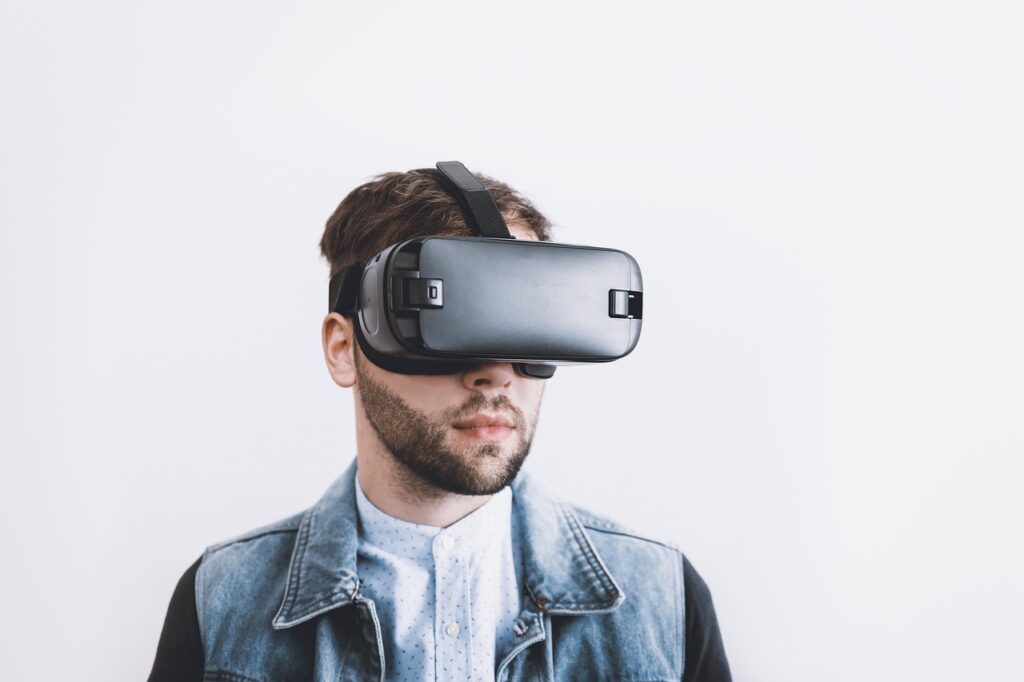

Have you ever wondered what it would be like to step inside your favorite video game or explore a new city without leaving your home? Virtual reality (VR) – a computer-generated simulation of a three-dimensional image or environment – a technology that allows users to experience and interact with virtual worlds, makes this possible. However, many people struggle to understand how VR works and how it can be used in their daily lives.
📝 Article Overview
Common Challenges With Breaking Down Virtual Reality (case study)
High Cost of Equipment
The high cost of VR equipment – including headsets, sensors, and controllers – is a significant barrier for many individuals and businesses, making it difficult for them to adopt this technology. This is because VR equipment requires advanced hardware and software components, such as high-resolution displays and powerful processors, which are expensive to produce and purchase. As a result, many people are unable to experience VR due to financial constraints.
Limited Content Availability
Another challenge facing the VR industry is the limited availability of high-quality content, including games, videos, and interactive experiences, which can make it difficult for users to find engaging and immersive experiences. This is because creating VR content requires specialized skills and equipment, and many developers are still learning how to create effective and engaging VR experiences. Furthermore, the cost of producing VR content can be prohibitively expensive for many creators.
Technical Issues and Complexity
VR technology can be complex and difficult to use, with many users experiencing technical issues such as lag, glitches, and compatibility problems, which can detract from the overall experience. This is because VR systems require precise calibration and synchronization of multiple components, including headsets, sensors, and computers, which can be prone to errors and malfunctions. Additionally, the complexity of VR technology can make it difficult for users to troubleshoot problems and find solutions. many users experiencing
Lack of Standardization
The VR industry currently lacks standardization, with different manufacturers and developers using proprietary formats and protocols, which can make it difficult for users to find compatible content and equipment. This can lead to fragmentation and confusion, making it harder for the industry to grow and mature. Furthermore, the lack of standardization can also limit the potential for innovation and collaboration, as different companies and developers may be working on incompatible solutions.
User Experience and Comfort
Finally, some users may experience discomfort or nausea when using VR equipment, particularly if they are prone to motion sickness or have certain health conditions, which can limit their ability to use VR technology. This is because VR can create a sense of disorientation and confusion, as the user’s senses are presented with conflicting information, which can cause physical and mental discomfort. To mitigate this, developers and manufacturers are working to create more comfortable and user-friendly VR experiences.
Top Virtual Reality Innovations to Know
1. Standalone Headsets
Standalone headsets are a type of VR equipment that does not require a computer or console to operate, making it more convenient and accessible for users. To implement this technology, manufacturers are developing headsets with built-in processors and storage, which can run VR experiences independently. This allows users to experience VR without the need for expensive computers or consoles.
- What You Gain: Increased convenience and portability
- Improved affordability and accessibility
- Enhanced user experience and simplicity
2. Social VR Platforms
Social VR platforms are online communities that allow users to interact with each other in virtual environments, creating new opportunities for socialization and collaboration. To implement this technology, developers are creating virtual worlds and avatars, which can be used to represent users and facilitate communication. This allows users to connect with others who share similar interests and passions.
- What You Gain: New opportunities for socialization and connection
- Enhanced collaboration and teamwork capabilities
- Increased sense of community and belonging
3. Advanced Controllers
Advanced controllers are a type of input device that allows users to interact with virtual objects and environments in a more natural and intuitive way, using gestures, movements, and other forms of input. To implement this technology, manufacturers are developing controllers with advanced sensors and tracking systems, which can detect and respond to user movements. This allows users to experience a more immersive and interactive VR experience.
- What You Gain: More natural and intuitive user interface
- Increased sense of presence and immersion
- Improved accuracy and responsiveness
4. VR Content Creation Tools
VR content creation tools are software applications that allow developers to create and design VR experiences, including games, videos, and interactive simulations, using a variety of assets and templates. To implement this technology, developers are creating user-friendly interfaces and workflows, which can simplify the content creation process and make it more accessible to non-technical users. This allows developers to create high-quality VR content without requiring extensive programming knowledge.
- What You Gain: Increased accessibility and usability for non-technical users
- Improved efficiency and productivity for developers
- Enhanced creativity and innovation in VR content creation
5. VR Training and Education
VR training and education are applications of VR technology that allow users to learn new skills and knowledge in a more engaging and effective way, using interactive simulations and virtual environments. To implement this technology, educators and trainers are creating customized VR experiences, which can be tailored to specific learning objectives and outcomes. This allows users to practice and apply new skills in a safe and controlled environment.
- What You Gain: More engaging and effective learning experiences
- Increased retention and recall of new knowledge and skills
- Improved performance and competency in real-world applications
6. VR Healthcare and Therapy
VR healthcare and therapy are applications of VR technology that allow patients to receive treatment and therapy in a more comfortable and effective way, using virtual environments and simulations to manage pain, anxiety, and other conditions. To implement this technology, healthcare professionals are creating customized VR experiences, which can be tailored to specific patient needs and conditions. This allows patients to experience a more personalized and effective treatment plan.
- What You Gain: More comfortable and effective treatment options
- Increased access to therapy and treatment for remote or underserved populations
- Improved patient outcomes and quality of life
| Approach | Old Way | Better Way | Result |
|---|---|---|---|
| Content Creation | Expensive and time-consuming | Accessible and user-friendly tools | More diverse and high-quality content |
| Equipment Cost | Prohibitive and exclusive | Affordable and accessible | Wider adoption and mainstream acceptance |
| User Experience | Complex and confusing | Intuitive and user-friendly | Increased engagement and retention |
| Social Interaction | Limited and isolating | Immersive and social | Stronger communities and relationships |
| Therapy and Treatment | Traditional and limited | Personalized and effective | Improved patient outcomes and quality of life |
How This Affects Everyday Life
Virtual reality is transforming the way people live, work, and interact with each other, from immersive entertainment and social experiences to revolutionary healthcare and education applications. For example, VR is being used to treat patients with anxiety disorders, allowing them to confront and overcome their fears in a safe and controlled environment. This is just one example of how VR can have a positive impact on people’s lives.
Another example is the use of VR in education, where students can learn new skills and knowledge in a more engaging and interactive way. This can be particularly beneficial for students who are visual or kinesthetic learners, as VR experiences can be tailored to their individual needs and learning styles. As a result, students can achieve better academic outcomes and develop a more positive attitude towards learning.
VR is also changing the way people socialize and interact with each other, creating new opportunities for connection and community-building. For instance, social VR platforms are allowing people to attend virtual events and meetups, which can be especially beneficial for those who are remote or have limited mobility. This can help to reduce feelings of loneliness and isolation, and promote a sense of belonging and connection.
In addition, VR is being used in the workplace to enhance productivity and collaboration, allowing employees to work together more effectively and efficiently. For example, VR can be used to simulate real-world scenarios and environments, allowing employees to practice and develop new skills in a safe and controlled way. This can help to improve job performance and reduce the risk of errors or accidents. collaboration allowing employees
Finally, VR is opening up new possibilities for entertainment and leisure, allowing people to experience immersive and interactive experiences that were previously impossible. For example, VR can be used to create virtual concerts and events, allowing people to attend and participate in live performances from anywhere in the world. This can help to promote social interaction and community-building, while also providing new opportunities for creativity and self-expression.
Step-by-Step Action Plan
- Start by learning more about VR technology and its applications, including the different types of headsets and equipment available, and the various ways in which VR can be used in daily life, because this will help to build a foundation of knowledge and understanding. This is an important step, as it will allow individuals to make informed decisions about how to use VR in their own lives.
- Next, consider investing in a VR headset or equipment, such as a standalone headset or advanced controllers, because this will allow individuals to experience VR firsthand and explore its many applications and benefits. This can be a significant investment, but it can also provide a high return in terms of entertainment, education, and personal growth.
- Then, explore the various VR experiences and applications available, including games, videos, and interactive simulations, because this will help to identify areas of interest and potential uses for VR in daily life. This can be a fun and engaging process, as individuals can discover new and exciting experiences that were previously unavailable.
- After that, connect with others who are also interested in VR, such as through social VR platforms or online communities, because this will provide opportunities for socialization, collaboration, and learning. This can help to build a sense of community and connection, while also promoting knowledge-sharing and innovation.
- Fifth, consider using VR for educational or training purposes, such as to learn new skills or knowledge, because this can help to improve academic or professional outcomes and enhance personal development. This can be a highly effective way to learn, as VR experiences can be tailored to individual needs and learning styles.
- Sixth, stay up-to-date with the latest developments and advancements in VR technology, including new equipment, software, and applications, because this will help to stay current and informed about the many possibilities and opportunities that VR has to offer. This can be an exciting and rapidly evolving field, with new innovations and breakthroughs emerging all the time.
- Finally, share knowledge and experiences with others, such as through social media or online forums, because this will help to promote awareness and understanding of VR and its many benefits and applications. This can be a valuable way to contribute to the VR community, while also helping to build a sense of connection and shared purpose.
Closing Thoughts
Virtual reality is a rapidly evolving and transformative technology that is changing the way people live, work, and interact with each other. As VR continues to advance and improve, it is likely to have an even more profound impact on society and individual lives. By understanding the many benefits and applications of VR, and by taking steps to learn more and get involved, individuals can position themselves for success and be a part of this exciting and rapidly evolving field. The future of VR is full of possibilities and promise, and it will be exciting to see how this technology continues to develop and shape the world in the years to come.