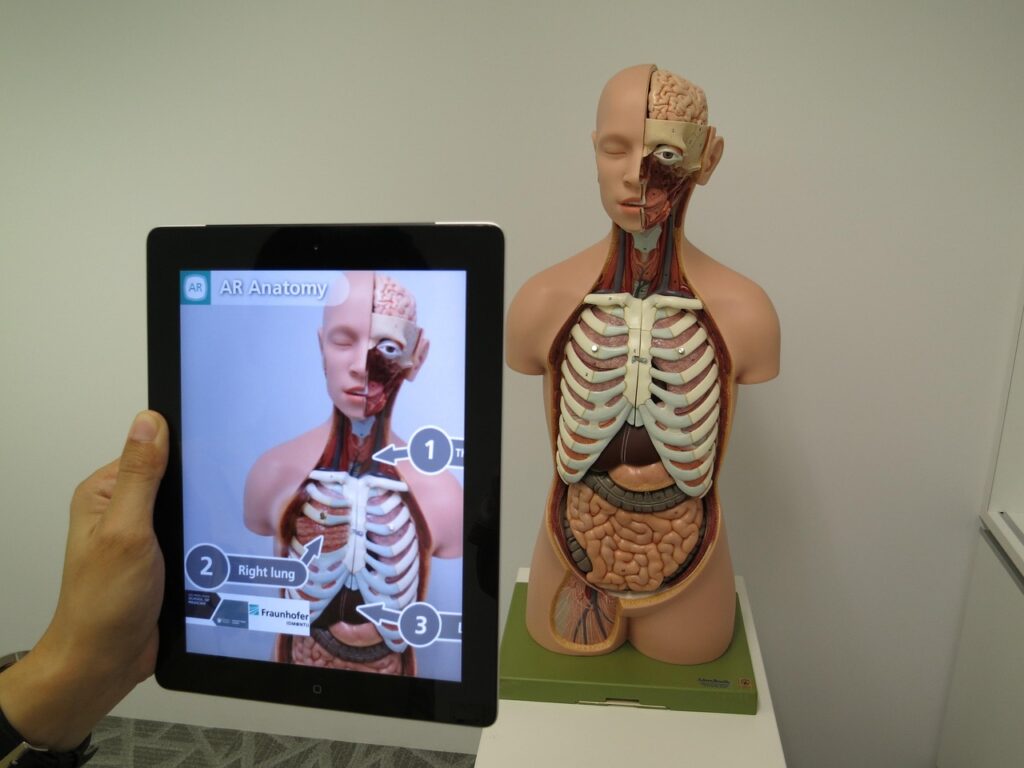

Many people believe that augmented reality (AR) is just a gimmick, only useful for gaming and entertainment. However, this couldn’t be further from the truth. Choosing the right approach to AR matters because it can have a significant impact on how we live, work, and interact with each other. For instance, companies like IKEA and Lego have already started using AR to enhance the customer experience, allowing users to see how furniture would look in their homes before making a purchase. Similarly, AR is being used in fields like education and healthcare to create more engaging and effective learning experiences. With the global AR market projected to reach $70 billion by 2023, it’s essential to separate fact from fiction and understand the true potential of this technology. As the use of AR becomes more widespread, it’s crucial to debunk common myths and misconceptions surrounding it.
📝 Table of Contents
What Is Augmented Reality?
Augmented reality is a technology that superimposes digital information onto the real world, using a device’s camera and display to blend the physical and virtual environments. This can be achieved through various devices, including smartphones, tablets, smart glasses, and head-mounted displays. AR is often confused with virtual reality (VR), but while VR creates a completely immersive digital environment, AR enhances the real world with digital data. To understand the potential of AR, it’s essential to evaluate key metrics such as field of view, resolution, and latency. The following table provides a comparison of some of the leading AR devices:
| Device | Field of View | Resolution | Latency |
|---|---|---|---|
| Google Glass | 40 degrees | 640×360 | 50ms |
| Microsoft HoloLens | 30 degrees | 1268×720 | 30ms |
| Apple ARKit | 60 degrees | 1080×1920 | 20ms |
| Epson Moverio | 23 degrees | 960×540 | 40ms |
As the table shows, different devices have varying levels of capabilities, and the choice of device depends on the specific use case and requirements. Understanding these key metrics is crucial for selecting the right AR solution for a particular application.
Major Augmented Reality Developments
Google ARCore
Google ARCore is a software development kit (SDK) that enables developers to build AR experiences for Android devices. With ARCore, developers can create apps that use the device’s camera, sensors, and display to provide an immersive AR experience. ARCore supports a wide range of devices, including smartphones and tablets.
- Advantages: get the details here
- Wide device support
- Easy to use and integrate
- Supports 3D modeling and animation
- Known Issues: Known Issues
- Limited support for iOS devices
- Can be resource-intensive, affecting device performance
Best for: Android app development and AR experiences that require 3D modeling and animation.
Apple ARKit
Apple ARKit is a set of tools and frameworks that enable developers to build AR experiences for iOS devices. ARKit provides a range of features, including 3D modeling, animation, and physics simulations. With ARKit, developers can create immersive and interactive AR experiences for iPhone and iPad users.
- Advantages:
- Seamless integration with iOS devices
- Supports advanced 3D modeling and physics simulations
- Easy to use and develop with
- Known Issues:
- Limited to iOS devices only
- Can be affected by device hardware limitations
Best for: iOS app development and AR experiences that require advanced 3D modeling and physics simulations.
Microsoft HoloLens
Microsoft HoloLens is a head-mounted display that provides a mixed reality experience, combining AR and VR capabilities. HoloLens is designed for enterprise and industrial applications, providing a range of features, including 3D modeling, animation, and collaboration tools.
- Advantages: discover more
- Advanced mixed reality capabilities
- Supports 3D modeling and animation
- Designed for enterprise and industrial applications
- Known Issues: Known Issues
- Expensive and limited availability
- Can be affected by device hardware limitations
Best for: Enterprise and industrial applications that require advanced mixed reality capabilities.
Epson Moverio
Epson Moverio is a range of smart glasses that provide an AR experience, designed for enterprise and industrial applications. Moverio smart glasses support 3D modeling, animation, and video streaming, making them ideal for applications such as remote training and support.
- Advantages:
- Advanced AR capabilities
- Supports 3D modeling and animation
- Designed for enterprise and industrial applications
- Known Issues:
- Limited availability and high cost
- Can be affected by device hardware limitations
Best for: Enterprise and industrial applications that require advanced AR capabilities and remote training support.
Vuforia
Vuforia is a software development kit (SDK) that enables developers to build AR experiences for a range of devices, including smartphones, tablets, and smart glasses. Vuforia supports 3D modeling, animation, and video streaming, making it ideal for applications such as marketing, education, and training.
- Advantages:
- Wide device support
- Easy to use and integrate
- Supports 3D modeling and animation
- Known Issues: Known Issues
- Can be resource-intensive, affecting device performance
- Limited support for advanced physics simulations
resourceintensive affecting device
Best for: AR experiences that require wide device support, 3D modeling, and animation.
| Option | Best For | Difficulty | Cost | Speed |
|---|---|---|---|---|
| Google ARCore | Android app development | Easy | Free | Fast |
| Apple ARKit | iOS app development | Easy | Free | Fast |
| Microsoft HoloLens | Enterprise and industrial applications | Difficult | High | Slow |
| Epson Moverio | Enterprise and industrial applications | Difficult | High | Slow |
| Vuforia | AR experiences for marketing, education, and training | Easy | Medium | Fast |
How to Choose the Right One
Choosing the right AR solution depends on several factors, including the specific use case, device requirements, and development expertise. Device support is a critical factor, as different AR solutions support different devices and platforms. For instance, Google ARCore and Apple ARKit are designed for Android and iOS devices, respectively, while Microsoft HoloLens and Epson Moverio are designed for enterprise and industrial applications.
Development expertise is another essential factor, as AR development requires specialized skills and knowledge. Developers should consider the level of difficulty and the resources required to develop and maintain an AR experience. Cost is also a critical factor, as AR solutions can range from free to expensive, depending on the features and capabilities required. another essential factor
In addition to these factors, speed and performance are also essential considerations. AR experiences that require fast rendering and low latency are critical for applications such as gaming and simulation. Security is another vital factor, as AR experiences often involve sensitive data and user information. these factors speed
Finally, scalability is a critical factor, as AR solutions should be able to handle a large number of users and devices. Developers should consider the scalability of the AR solution and its ability to handle increased traffic and usage. devices Developers should
How This Affects Everyday Life
AR is already having a significant impact on everyday life, from the way we shop and interact with products to the way we learn and work. For instance, IKEA’s AR app allows users to see how furniture would look in their homes before making a purchase, reducing the need for returns and improving the overall shopping experience. furniture would look
AR is also being used in education to create more engaging and interactive learning experiences. Students can use AR to visualize complex concepts and interact with 3D models, making learning more fun and effective.
In healthcare, AR is being used to enhance patient care and improve medical training. Doctors can use AR to visualize patient data and anatomy, making diagnoses and treatments more accurate and effective.
AR is also being used in marketing and advertising to create more immersive and interactive experiences. Brands can use AR to create interactive product demos and virtual try-on experiences, increasing customer engagement and conversion rates.
In addition to these applications, AR is also being used in fields such as architecture, engineering, and construction to enhance design and building processes. Architects and engineers can use AR to visualize and interact with building designs, reducing errors and improving collaboration.
Finally, AR is being used in the entertainment industry to create more immersive and interactive experiences. Gamers can use AR to play interactive games that blur the line between the physical and virtual worlds, creating a more engaging and thrilling experience.
What It All Means
The world of AR is rapidly evolving, with new technologies and innovations emerging every day. As AR becomes more widespread and accessible, it’s essential to separate fact from fiction and understand the true potential of this technology. By choosing the right AR solution and considering key factors such as device support, development expertise, and cost, developers and users can find the full potential of AR and create more immersive, interactive, and effective experiences. With the global AR market projected to reach $70 billion by 2023, the future of AR looks bright, and its impact on everyday life will only continue to grow. The key to success lies in understanding the different AR solutions and choosing the right one for the specific use case and requirements. By doing so, developers and users can harness the power of AR and create a more engaging, interactive, and connected world.